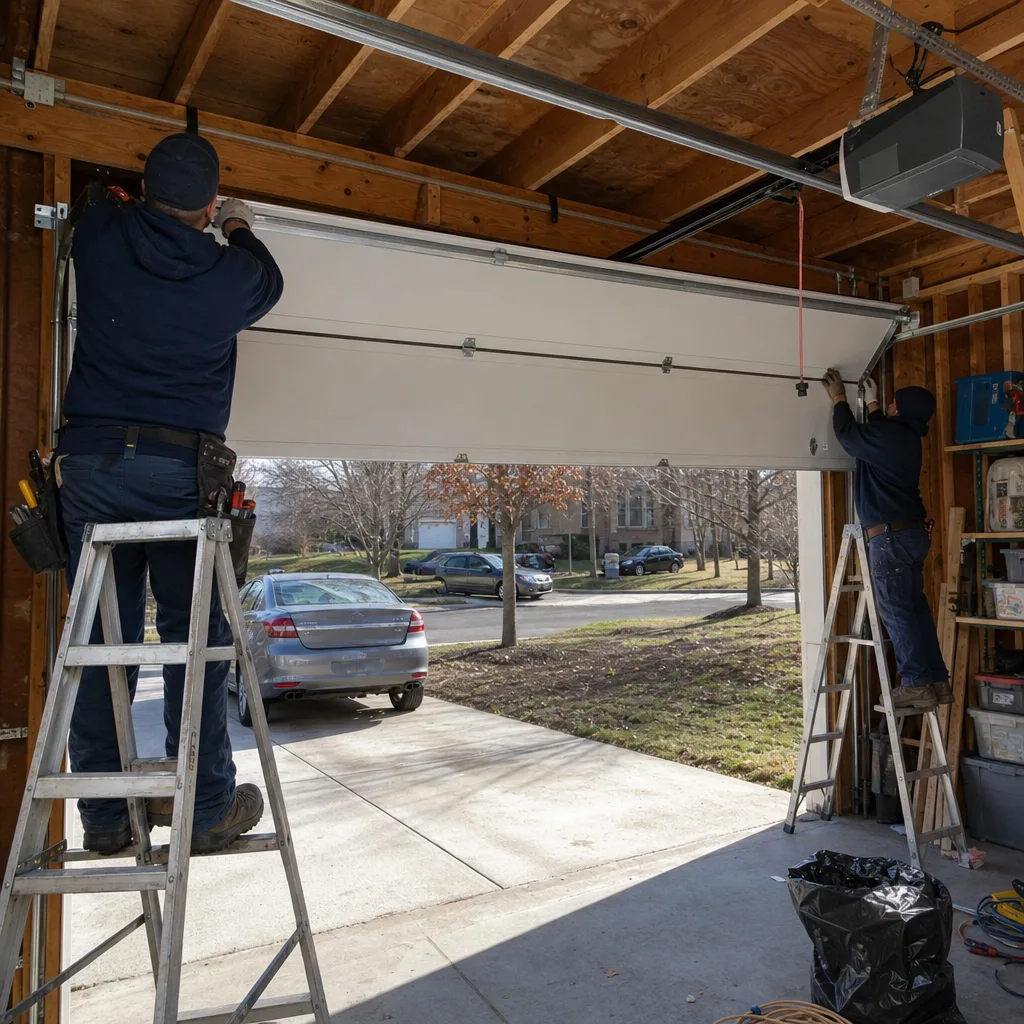
Last updated November 21, 2026
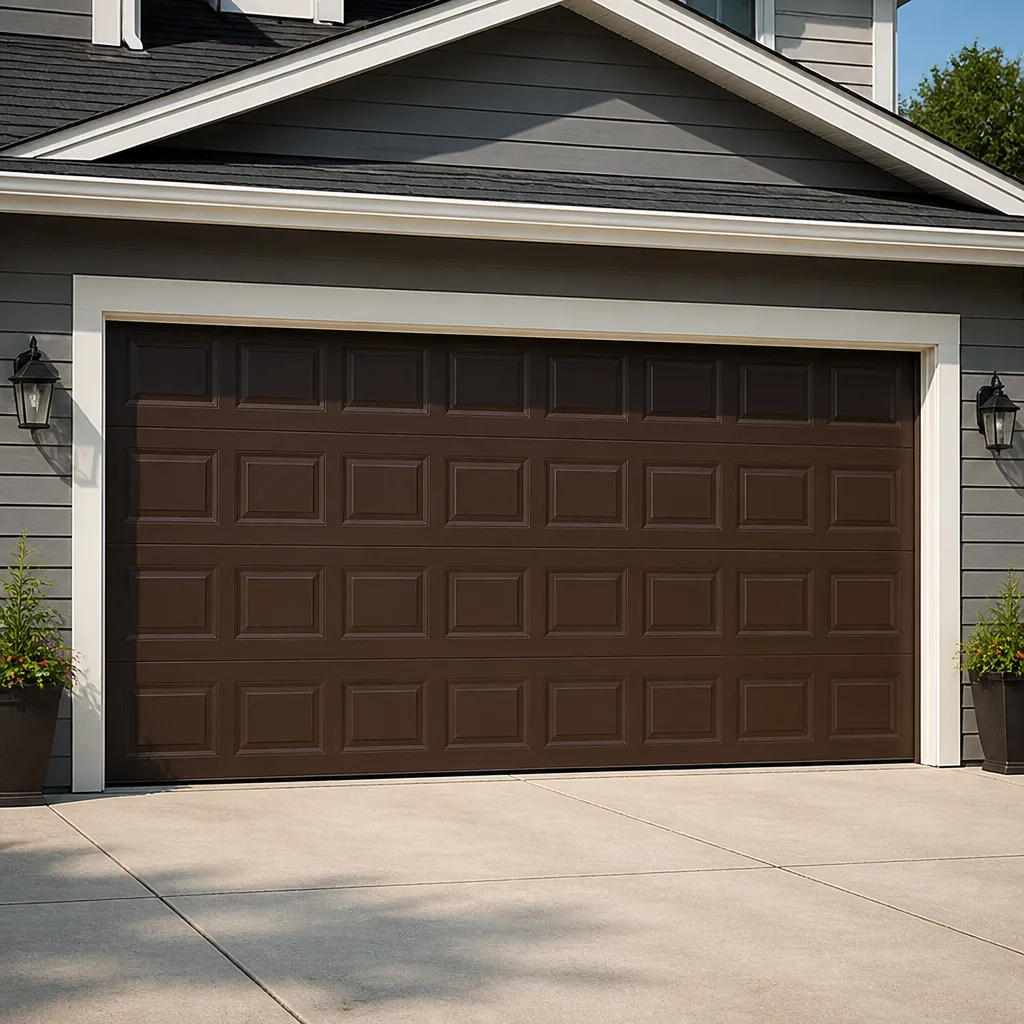 Raised-panel steel
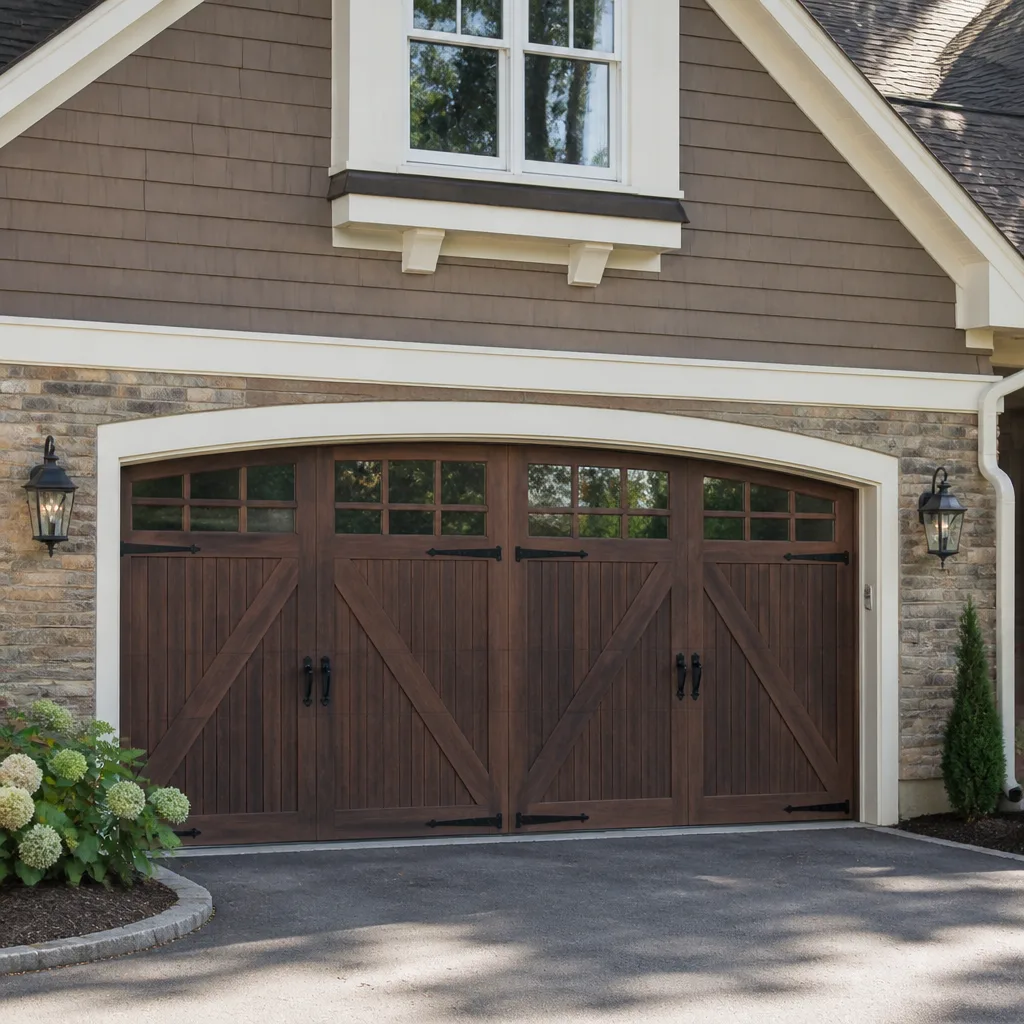 Carriage house
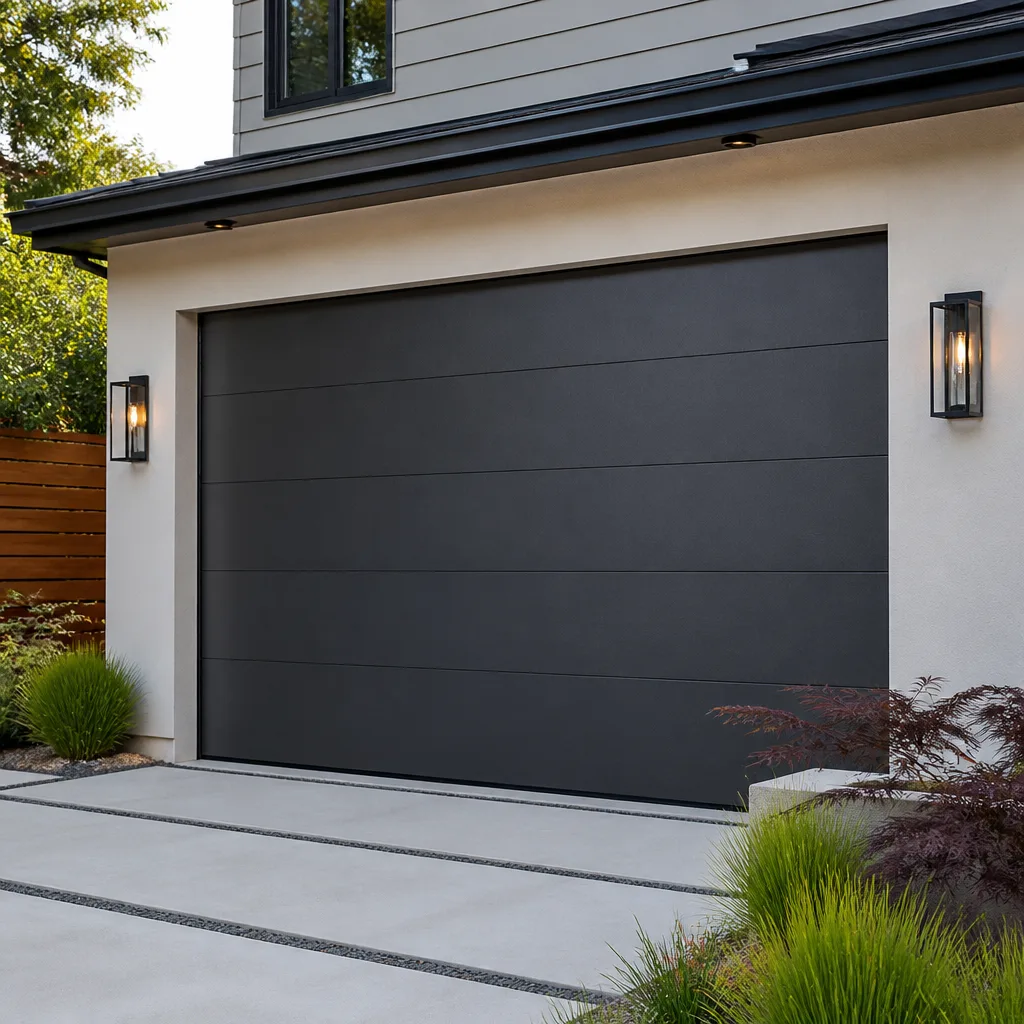 Modern flush
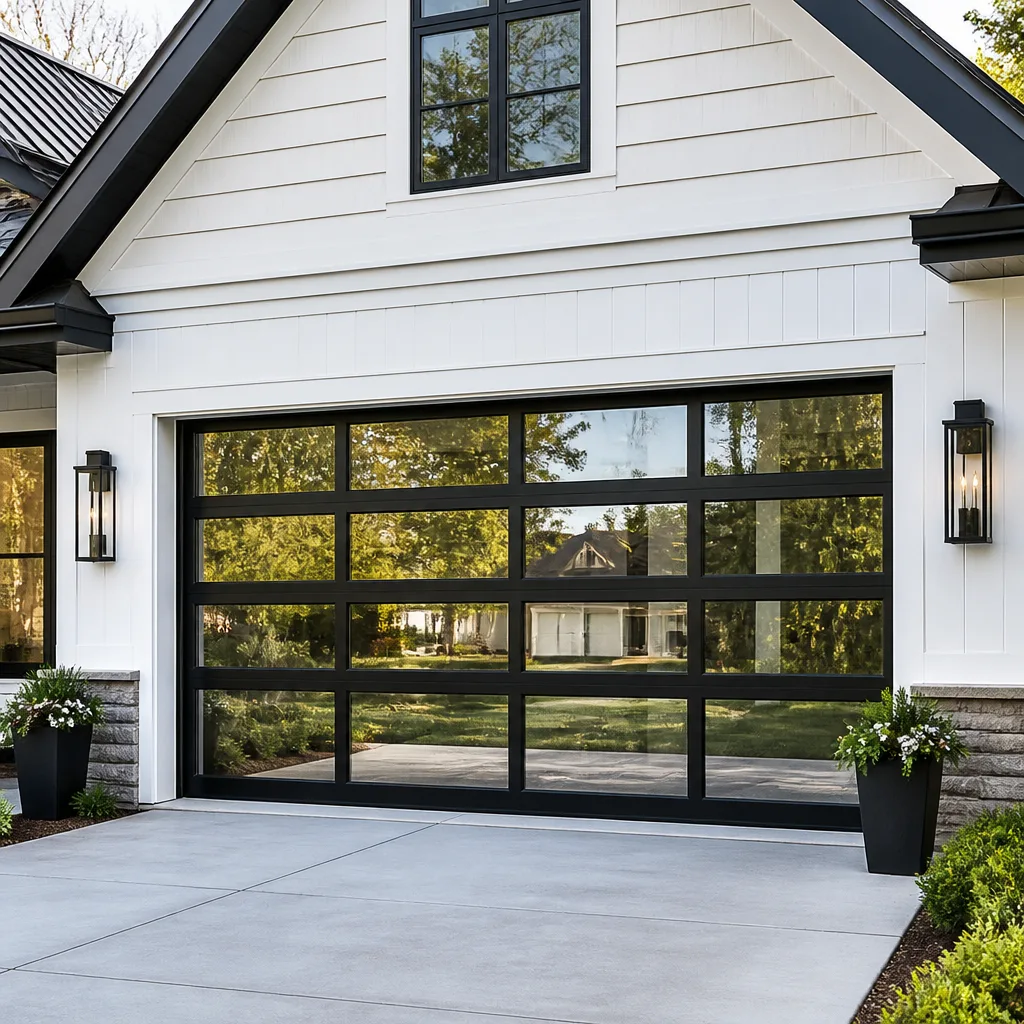 Full-view glass
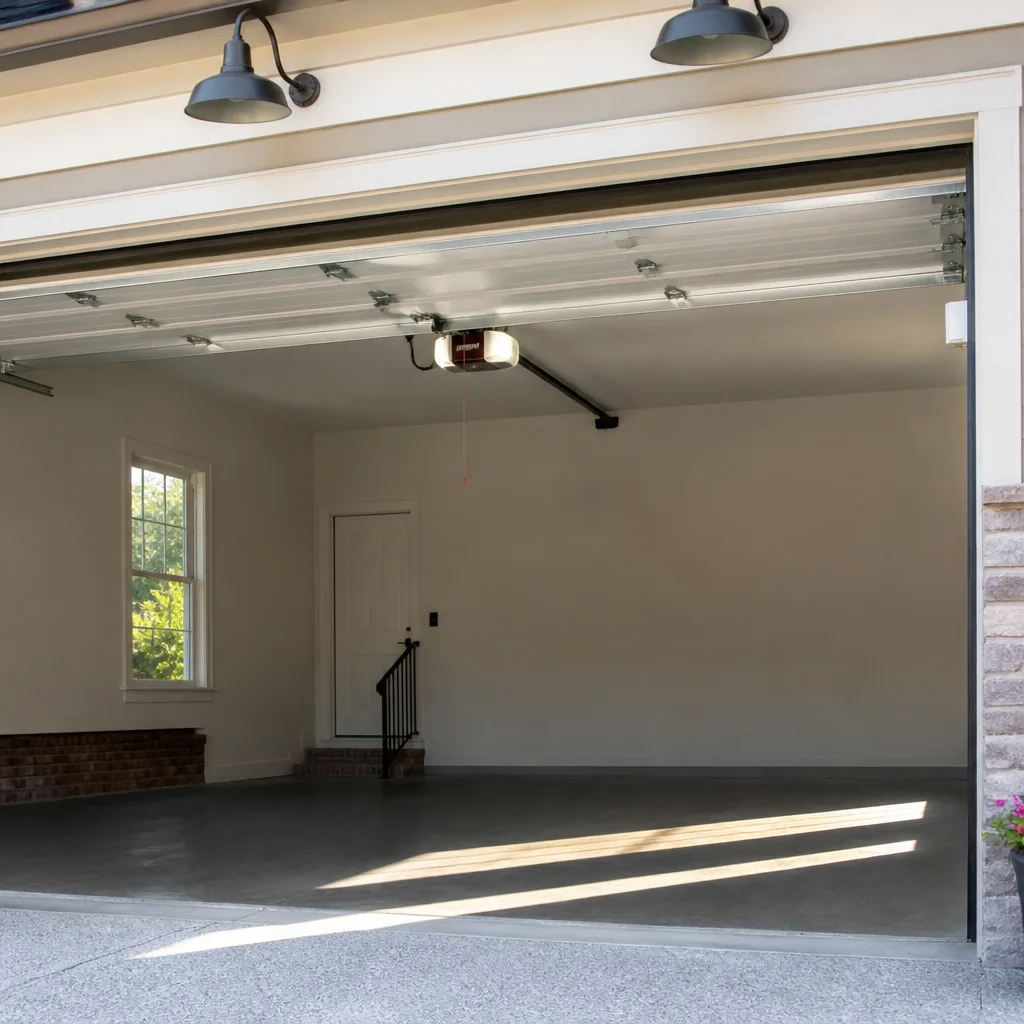 LiftMaster openers
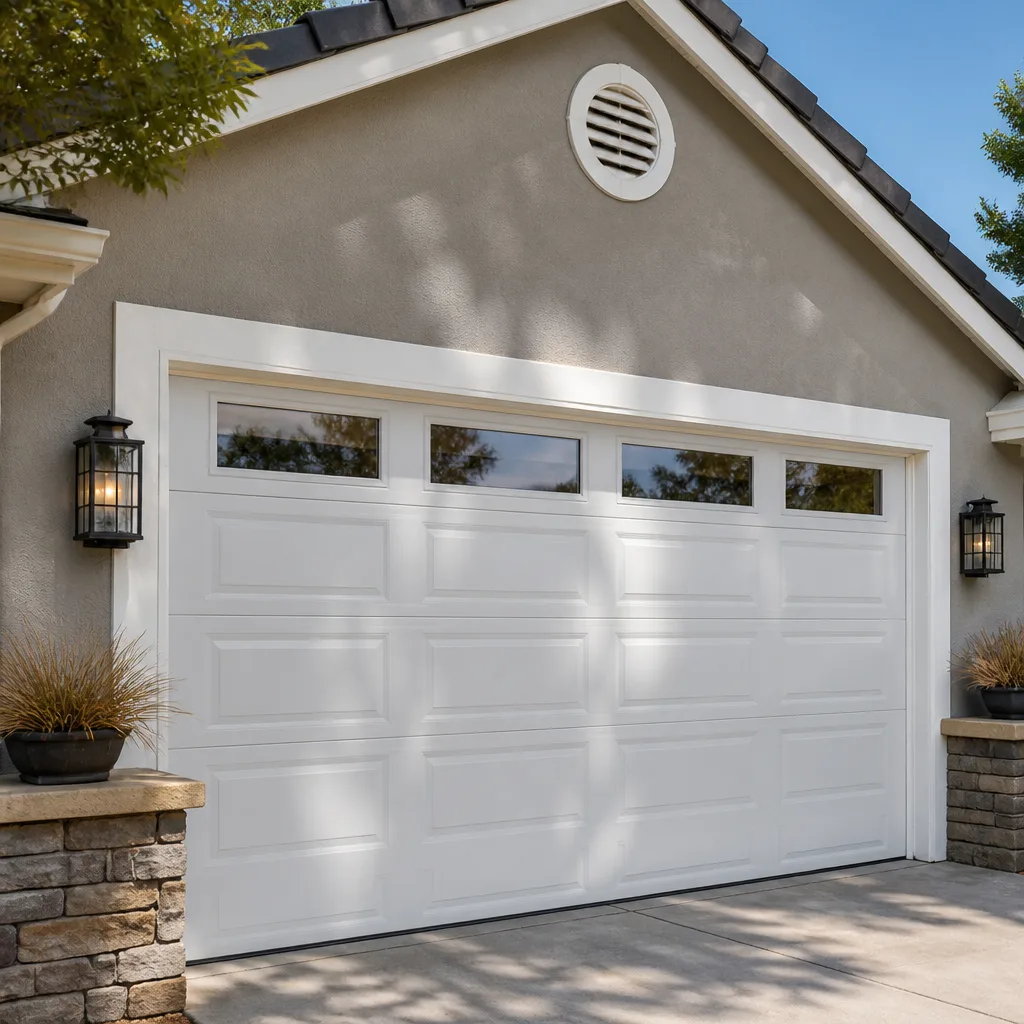 Chamberlain openers
Full 25-point door and opener safety check with every visit - springs, cables, rollers, tracks, and your LiftMaster or Chamberlain opener included
You get a price before we start. It does not change when the pro arrives.
Get your free estimateThe Complete Guide to Garage Doors in Mayfair
A garage door is the heaviest moving object in most Mayfair homes. It cycles thousands of times a year, and most owners can’t name a single component until something snaps at 7am and the car is trapped inside. That’s the counterintuitive part: the failure almost never starts with the part that broke. It starts weeks earlier, in a spring that lost a little tension, a track that drifted a quarter inch, or an opener that’s been straining against a door it can no longer lift cleanly. This guide explains how those systems interact in Mayfair’s housing stock, what each part does, which brands fit which driveways, and when a repair is a real repair versus a signal that the whole door has reached the end. You’ll finish knowing your own door better than most people ever do.
Quick Answer
Most garage door failures in Mayfair come down to three interacting systems: spring tension, track alignment, and opener torque. When one drifts, the other two take the strain, so replacing a single broken part without checking the other two usually means a second breakdown not long after. The right approach is a full-system inspection, then a written estimate that tells you whether repair or replacement makes sense for your door’s age and your garage’s constraints.
Styles & brands we work with
- Raised-panel steel
- Carriage house
- Modern flush
- Full-view glass
- LiftMaster openers
- Chamberlain openers
Table of Contents
- The Three Systems That Actually Control Your Door
- How Mayfair’s Older Garages Shape Your Options
- Springs, Cables, and Seals: Why They Fail Together
- Brand Comparisons Mapped to Mayfair Driveways
- Part-by-Part Glossary of Failure Symptoms
- Repair or Replace? Reading the Signals
- The Owner’s Inspection Routine
- Safety: What You Should Never Touch
The Three Systems That Actually Control Your Door
Every overhead garage door, regardless of brand or age, balances on three systems working in agreement. The springs carry the weight. The tracks and cables keep the door moving in a straight, controlled path. The opener supplies a gentle push and pull, not the lifting force itself. Owners tend to think of these as separate repairs, and that’s the root of most repeat failures in Mayfair.
Here’s how the relationship works:
- Spring tension counterbalances the door’s weight so a person could lift it by hand. When tension drops, the door feels heavy and the opener works overtime.
- Track alignment and cable drums guide the door’s travel. A bent track or a cable that’s jumped its drum adds friction the springs weren’t sized for, and friction eats spring life.
- Opener torque is the motor’s lifting force. It’s calibrated to a door that moves freely. Add weight or friction and the opener ages fast – burned-out logic boards, stripped gears, and stripped trolley carriages all trace back to this.
The practical consequence: a technician who replaces only the broken spring on a door with a misaligned track has fixed the symptom. The new spring now carries the same excess load that killed the old one, and it fails early. That’s why our spring work always includes a track, roller, and balance check. One call should cover the whole system, not one part of it.
If your door is currently stuck or making alarming noises, start with garage door repair rather than trying to diagnose further. The rest of this guide is about understanding, not doing.
How Mayfair’s Older Garages Shape Your Options
Mayfair’s housing stock includes a large share of homes built before 1980, many with attached garages that were sized for smaller cars and simpler doors. Those garages are perfectly serviceable, but their dimensions matter when you’re choosing springs, openers, or a replacement door. A technician who doesn’t measure your actual headroom and side clearance before quoting is guessing.
Three constraints show up again and again in Mayfair garages:
- Low headroom. Older attached garages often have a shallower ceiling than a modern build. A standard torsion spring setup needs specific clearance above the door’s highest point. When that space isn’t there, the answer is a low-headroom torsion kit, a different track configuration, or in some cases a different door style entirely.
- Narrow side clearance. Spring drums, tracks, and hinges need room at the sides. A carport conversion or a garage that shares a wall with the house can leave very little. This is a case where a specific brand’s door profile may fit where another won’t.
- Header height and door weight. A short header limits how tall the door can be, and it also changes the spring sizing math. A door that’s slightly heavier than the original, whether from insulation or glass panels, needs springs rated for that weight.
None of this is unsolvable. It just means the quoting visit has to include real measurements, not a phone estimate based on a photo. If you’re weighing a new door, ask for a free measure so the numbers are on paper before anything is ordered. Our garage door installation process starts exactly there.
One more local note: Mayfair summers are warm and humid and winters bring freeze cycles. That matters for your door’s moving parts. Grease thickens in the cold, wooden bottom sections absorb moisture and swell, and rubber seals stiffen then crack. A door that worked smoothly in October can feel sticky and loud by February, and that friction loads the opener and springs. Seasonal friction is one reason our inspections look at seals and hinges as closely as springs.
Springs, Cables, and Seals: Why They Fail Together
Torsion springs are the coiled steel bars mounted above the door; extension springs run along the tracks on either side. Both store the energy that balances the door’s weight. Both are under enormous tension at all times, whether the door is up or down. That’s why spring work is safety-critical and why many generalist contractors either avoid it or bring in someone else.
The interdependence that catches owners is this chain:
- A stiff or torn bottom seal adds friction at the floor. The door drags.
- That drag adds load to the cables and drums. A cable can jump its drum or fray.
- The springs absorb the extra load and lose tension faster than they should.
- The opener, sensing resistance, works harder and runs hotter.
Replace any one link in that chain without checking the others and the system keeps fighting itself. In our experience, a bottom seal that costs very little to renew is one of the most overlooked causes of premature spring wear in Mayfair. If your door is hard to lift by hand with the opener disconnected, friction or spring tension (or both) is the reason, and it deserves a proper look.
Perhaps the most important thing to say about springs is this: never attempt to adjust, wind, or replace a torsion spring yourself. The stored energy in a wound spring can cause severe injury in an instant. Cable drums and cables carry the same warning. Professional technicians use winding bars and specific tools for good reason, and this is a job for trained hands every time. Our spring service is a core part of what we do, not an add-on.
Brand Comparisons Mapped to Mayfair Driveways
Brand choice is less about loyalty and more about fit. A door that’s perfect for a wide, shallow, attached garage may be the wrong pick for a narrow side-entry or a detached building with its own access pattern. Here’s how the major names line up for the common Mayfair situations.
Clopay
Clopay’s lineup spans basic steel panels up to heavily insulated, carriage-style doors. For a Mayfair attached garage that faces the street, Clopay’s insulated options hold their shape well through freeze-thaw and quiet down the door’s travel. If you want a conventional look with better thermal behavior, this is a practical starting point.
Amarr
Amarr doors come in a broad range of styles and price points, and they adapt well to awkward openings where the header height is limited. For a side-entry or a garage tucked behind the house, Amarr’s flexibility on sizing is a real advantage during a free measure.
Wayne Dalton
Wayne Dalton is a strong fit for detached garages and properties where the door isn’t part of the main façade. Their options cover both traditional and specialty looks, and their parts are widely supported, which matters for long-term repair.
Openers: Genie, LiftMaster, Chamberlain, and Craftsman
The opener half of the system deserves its own conversation, and we cover it in depth in our garage door opener repair guide. The short version: Genie openers are common, straightforward to service, and well-suited to a single-car detached garage. LiftMaster and Chamberlain (same underlying family) offer belt and chain drives with quiet operation and smart integration, which suits an attached garage under a bedroom. Craftsman units are everywhere on older doors and are perfectly serviceable with the right parts.
What matters more than the badge is whether the person you call works on your specific brand. We work on Genie, LiftMaster, Chamberlain, Clopay, Amarr, Wayne Dalton, Craftsman, and Raynor, so a door-and-opener mismatch isn’t a problem.
Part-by-Part Glossary of Failure Symptoms
Knowing what a noise means saves you time and money. The parts talk to you before they fail; you just have to know the language.
- Worn roller bushing: a steady squeal or chirp that rises and falls with the door’s travel, often worst at the halfway point. It’s metal-on-metal, and it usually means the roller is dry or shot.
- Binding bottom section hinge: a sharp creak or pop at the bottom corners as the door starts to lift. The hinge is binding, and left alone it stresses the bottom panel and cable.
- Failing torsion spring: a single loud bang followed by a door that won’t lift, or lifts only a foot and stops. The spring has snapped. Do not run the opener.
- Jumped cable: the door lifts at an angle, one side higher than the other. The cable has come off its drum, and continuing to cycle the opener can twist the door.
- Logic board failure: the opener clicks, lights flicker, but nothing moves, or it moves and reverses for no reason. A control board issue, common on aging units.
- Trolley carriage failure: the motor runs and sounds normal but the door doesn’t move. The carriage that couples the arm to the rail has stripped.
- Stiff or cracked bottom seal: drafts, water at the garage floor, and a door that seems to drag near the ground. Renewal is simple and prevents bigger problems.
Each symptom is a starting point, not a diagnosis. A chirp can be a roller or a misaligned track; a bang can be a spring or a cable. A proper look tells you which. What it always tells us is whether the fix is local or the whole system is struggling.
Repair or Replace? Reading the Signals
The honest test is not “how old is the door” but “is the structure still sound?” A well-built door with one failed spring and a worn seal is a repair job, all day long. A door with multiple stress fractures, a bowed bottom panel, or track and hardware that’s been repeatedly forced can end up costing more to keep alive than to replace, and a specialist should be willing to say so.
Consider replacement when you see most of these together:
- Repeated spring or cable failures within a short window, with no clear friction cause.
- Visible stress cracks along a section, or a bottom panel that’s bowed or separated at the hinge.
- Rusted or bent tracks that won’t stay straight after adjustment.
- A door so heavy the opener struggles, even after spring work.
- Safety features the door lacks entirely, such as a functioning reversal system.
For Mayfair owners, there’s also an honesty test on the company you call. A repair-and-install operator with no conflict of interest is one who’ll tell you to repair a sound door. If a technician recommends replacement without showing you why, ask for the reasoning in writing alongside the estimate. You’ll know in a minute whether you’re talking to a specialist or a salesperson.
If the door truly is at end of life, our whole-system view matters. We can replace the door and respec the springs and opener to match, rather than hanging a new door on tired hardware and hoping.
The Owner’s Inspection Routine
You don’t need to touch the dangerous parts to catch most problems early. A few minutes of looking and listening, done a few times a year, will tell you when to call. The routine is simple.
- Do the balance test. Close the door, disconnect the opener (usually a pull cord), and lift the door halfway. A healthy door stays put. One that sinks or races up has a tension problem.
- Look along the tracks. Stand at eye level and sight down each track. You want straight lines. A visible bend or kink is a call to a professional.
- Check the rollers. Gently wiggle each roller in its hinge. A lot of play or visible flat spots means wear.
- Examine the bottom seal. Look for cracks, tears, or places where it’s pulled away from the floor. This is what keeps Mayfair’s weather out and friction down.
- Listen. Cycle the door and note any new noise. A chirp or pop is worth mentioning on your next call.
- Test the reversal. With the door closing, place a small object in its path. A properly adjusted door reverses on contact. If it doesn’t, get it checked.
None of this involves opening the spring housing or tugging a cable. That’s by design. Maintenance for the owner is looking, listening, and calling when something changes. The routine catches the small stuff before it becomes a morning stuck-car problem.
Safety: What You Should Never Touch
The dangerous parts of a garage door are hidden in plain sight. Torsion and extension springs store a huge amount of energy. Cables are under the same tension. A wound spring can release in a fraction of a second, and the tools a technician uses are there because hands and screwdrivers are not enough. This is the one area where we’d rather you call us than try.
The safe list for owners: do not adjust, wind, or remove a spring. Do not touch a cable or drum. Do not run the opener on a door with a snapped spring or a fallen door. Do not climb into the spring assembly at all. If you see or hear something wrong, stop using the door and call a trained professional. That’s a genuine request, not a sales line. We’d rather earn a repair job than read about a preventable injury.
The other safety dimension is the reversal system. If your door doesn’t reverse when something is in its path, that’s a fault to fix, not a feature to live with. Any competent inspection includes it.
Common Mistakes to Avoid
- Replacing the spring without checking the tracks and cables. The new spring then fails early because it’s carrying the same excess friction that killed the old one. Always ask for a full-system check.
- Running the opener on a broken spring. It seems harmless because the motor still turns, but the opener can damage itself and the door simultaneously while the door is unbalanced. Stop and call.
- Ignoring a sound because the door still works. A chirp, pop, or squeal is the part telling you it’s wearing. Catch it before it snaps.
- Assuming older Mayfair garages can’t fit a modern door. Low headroom and narrow clearance are real, but they’re solvable with the right sizing and a proper measure. Don’t rule out a better door based on a guess.
- Quoting from a photo or a phone call. Spring and opener selection depend on measurements. A free measure is the only honest basis for a price.
- Trying DIY spring or cable work. This is the mistake that most often leads to serious injury. Leave the tensioned parts to specialists.
- Skipping the bottom seal because it’s minor. It’s a small part with an outsized role in friction, drafts, and water at the floor. Renew it before it takes a spring with it.
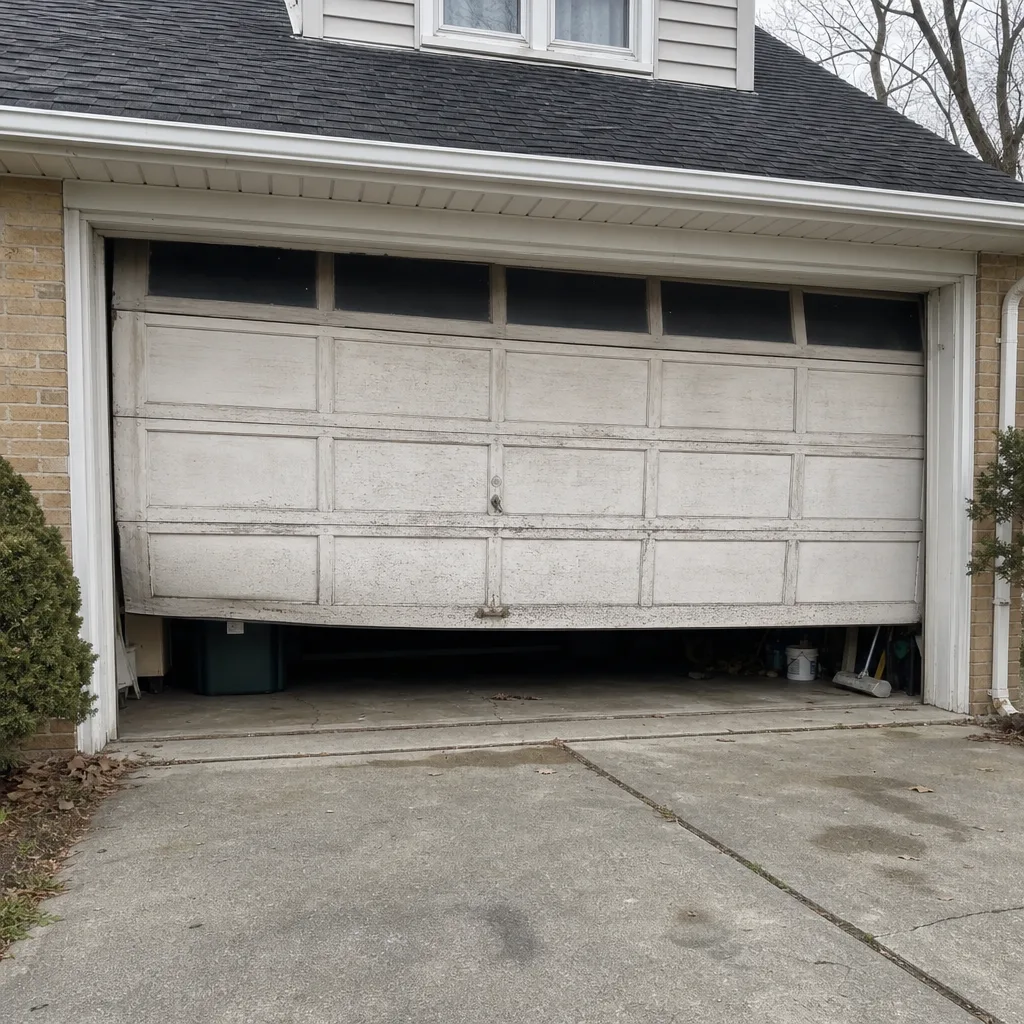
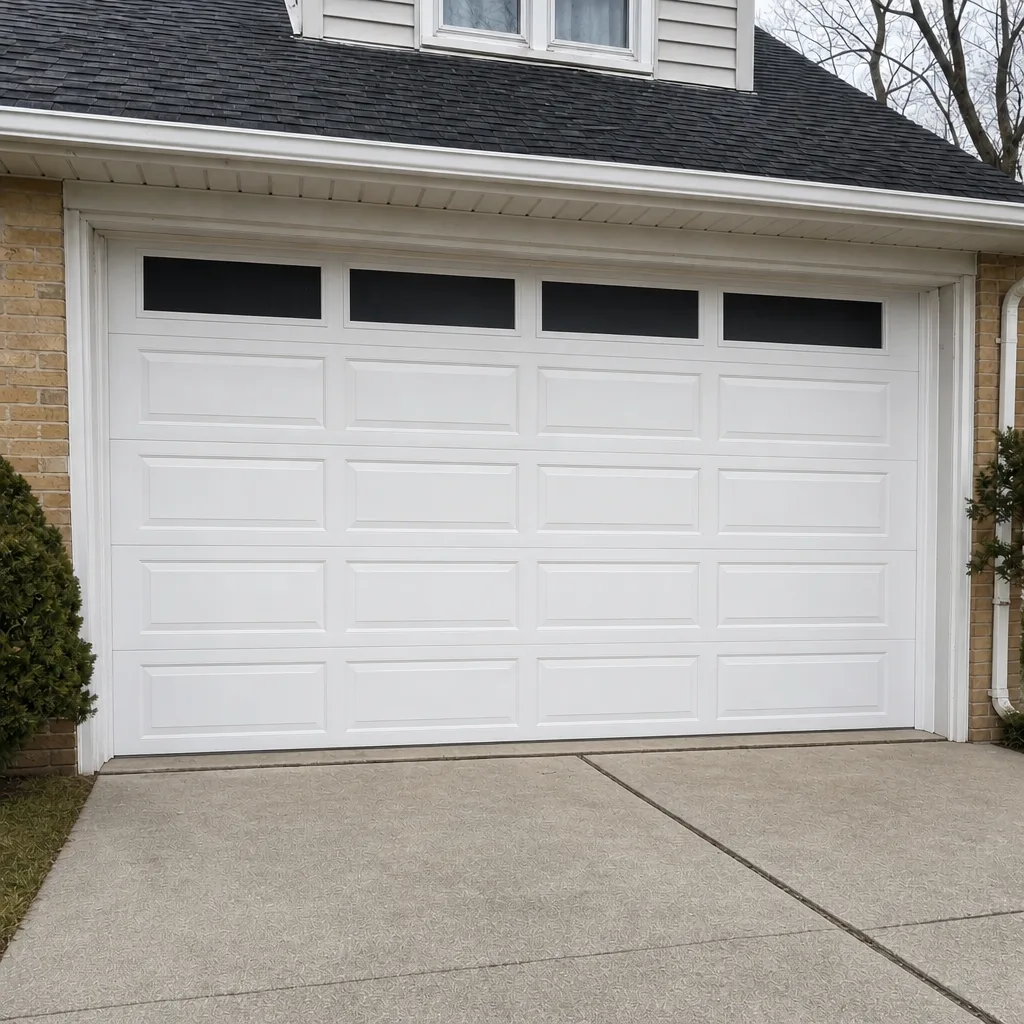
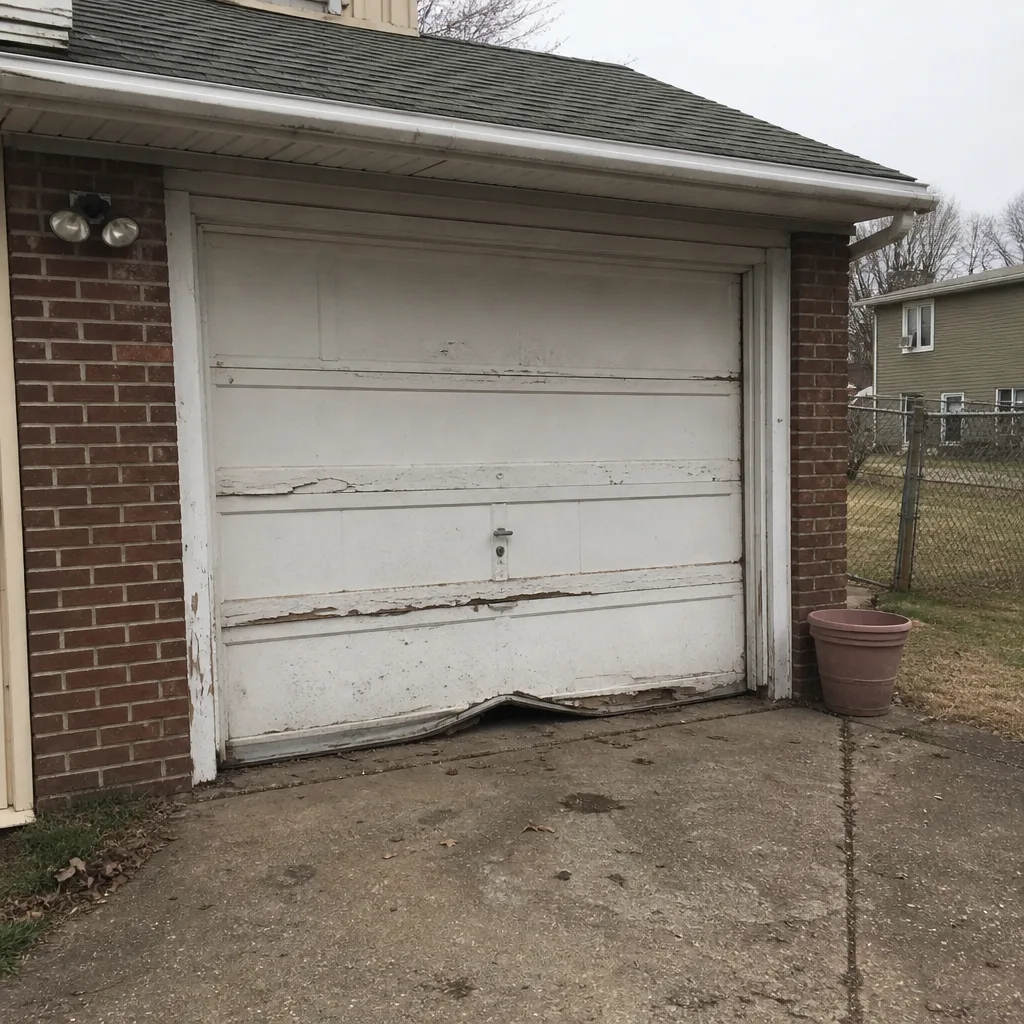
See the difference
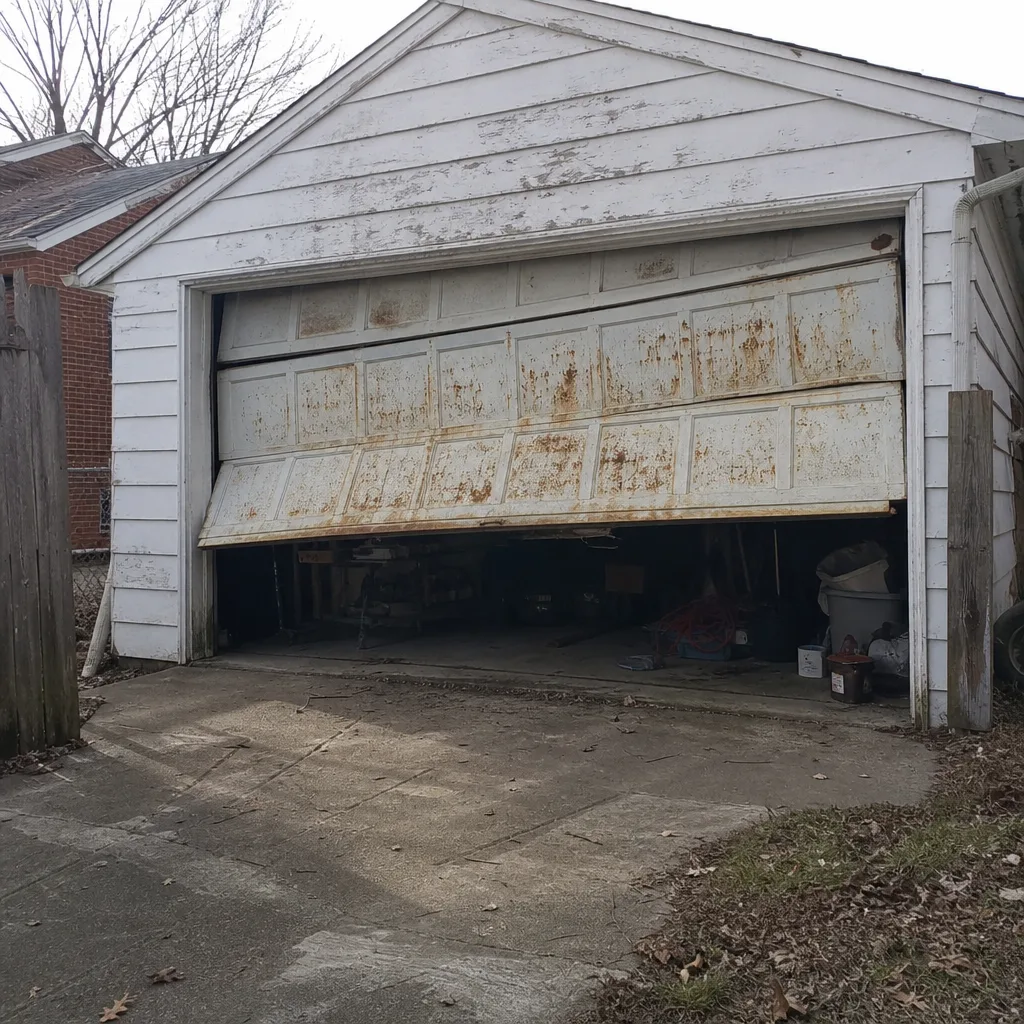 Before
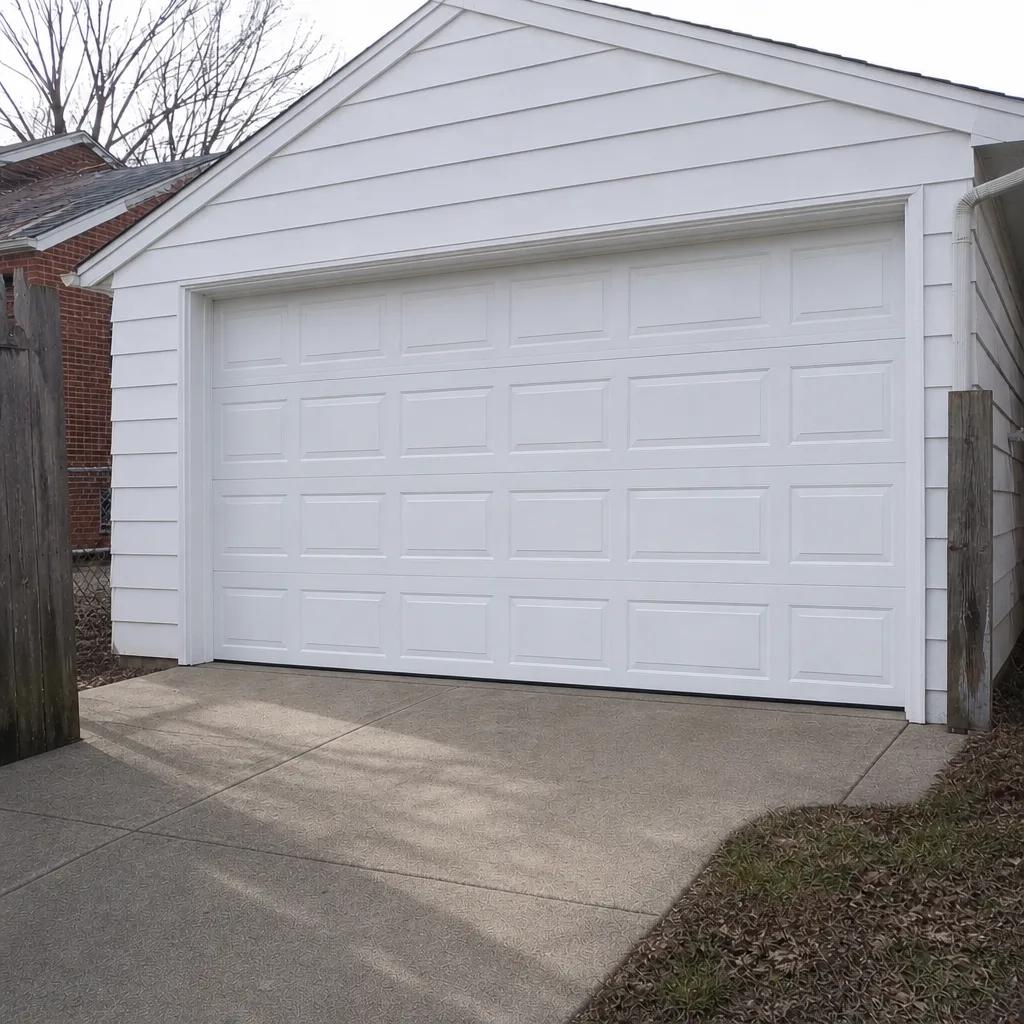 After
 Before
 After
 Before
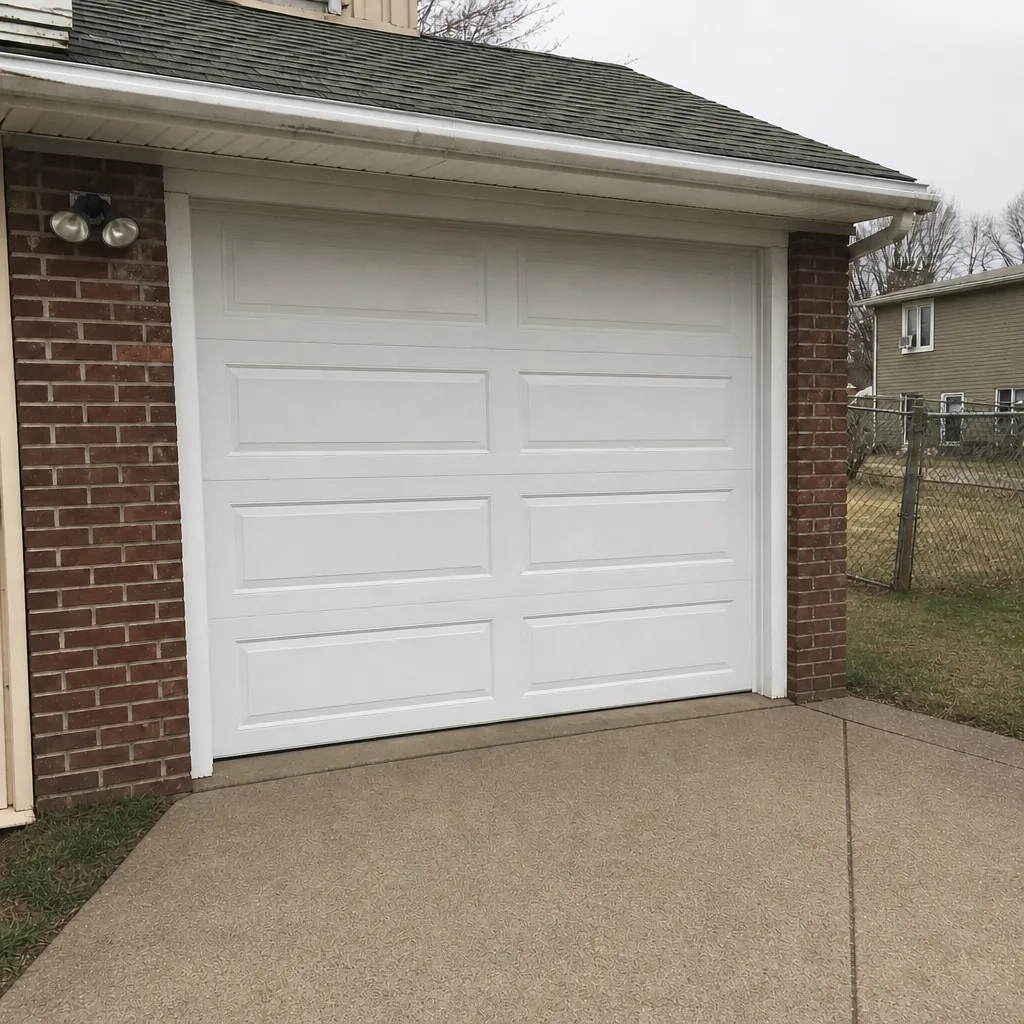 After
When to Call a Professional
Call us when the door won’t open, when it moves unevenly or makes a sudden bang, when the opener runs but the door doesn’t, or when you see a bent track, a slack cable, or a cracked panel. Call if the reversal test fails, if the door is hard to lift by hand, or if you’re not sure whether repair or replacement makes sense. These are all situations where a trained eye saves you money and risk. Garage Door Repair Mayfair offers free estimates in Mayfair, and the price is quoted and agreed before any work starts. Call (833) 468-5701 – for an urgent stuck door, our emergency garage door service is structured for same-day response.
Frequently Asked Questions
It depends on whether you have one spring or a matched pair, and on the door’s size and hardware, but the written estimate sets the final price and that’s what you pay. Call (833) 468-5701 for an exact quote – estimates are free.
Often, yes. Our emergency garage door service is built for exactly this situation, and we’ll tell you plainly what’s achievable when you call. Call (833) 468-5701 and we’ll get you scheduled.
No. We inspect, then give you a written estimate, and you approve it before any work starts. If the inspection reveals something extra, you hear about it before we touch anything. Call (833) 468-5701 for a free quote.
The local professional we connect you with is licensed and insured as their state requires. Our technicians have up to 12 years of experience and are dedicated garage door specialists, not generalists. Call (833) 468-5701 to talk through your door.
Yes, in most cases. Low headroom just changes which torsion setup and track configuration you need, and some brands adapt better to short headers than others. The answer comes from a free measure, not a guess. Call (833) 468-5701 to book one.
Repair when the structure is sound and the problem is a worn part. Replace when the panels are stressed or bowed, the tracks won’t stay straight, or failures keep coming back. We’ll give you an honest call and the reasoning behind it. Call (833) 468-5701 to start with a free estimate.
The Bottom Line
Your garage door is a system, not a collection of parts. Spring tension, track alignment, and opener torque all pull on each other, so the smartest move is to understand the relationships and catch drift early. Mayfair’s older garages add a layer of measurement and fit to the equation, and that’s where a specialist who works on your brand matters. Keep the owner’s routine, respect the tensioned parts, and call when something changes. We’ve built Garage Door Repair Mayfair around that single trade, so the diagnosis is fast and the fix is complete. Call (833) 468-5701 for a free estimate – the price is agreed before any work starts.
Written by the team at Garage Door Repair Mayfair.