Last updated November 21, 2026
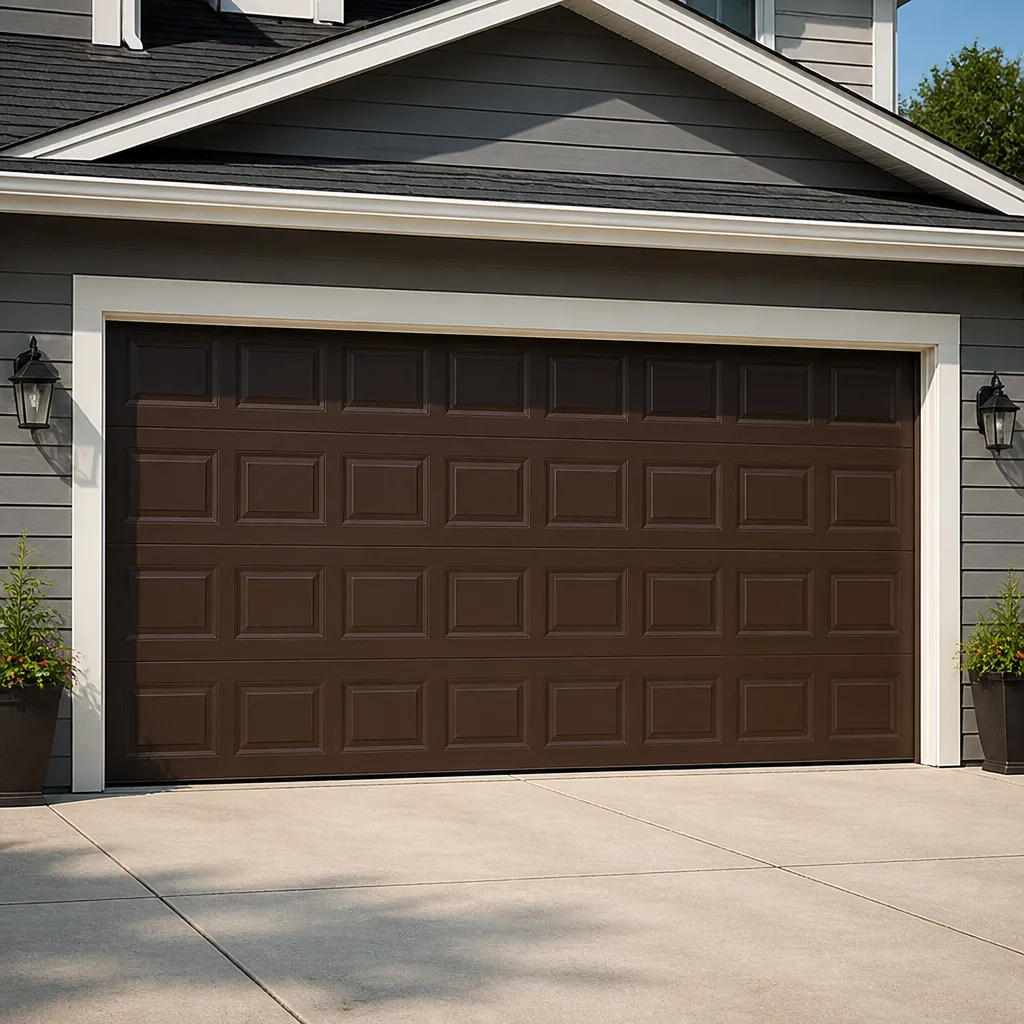 Raised-panel steel
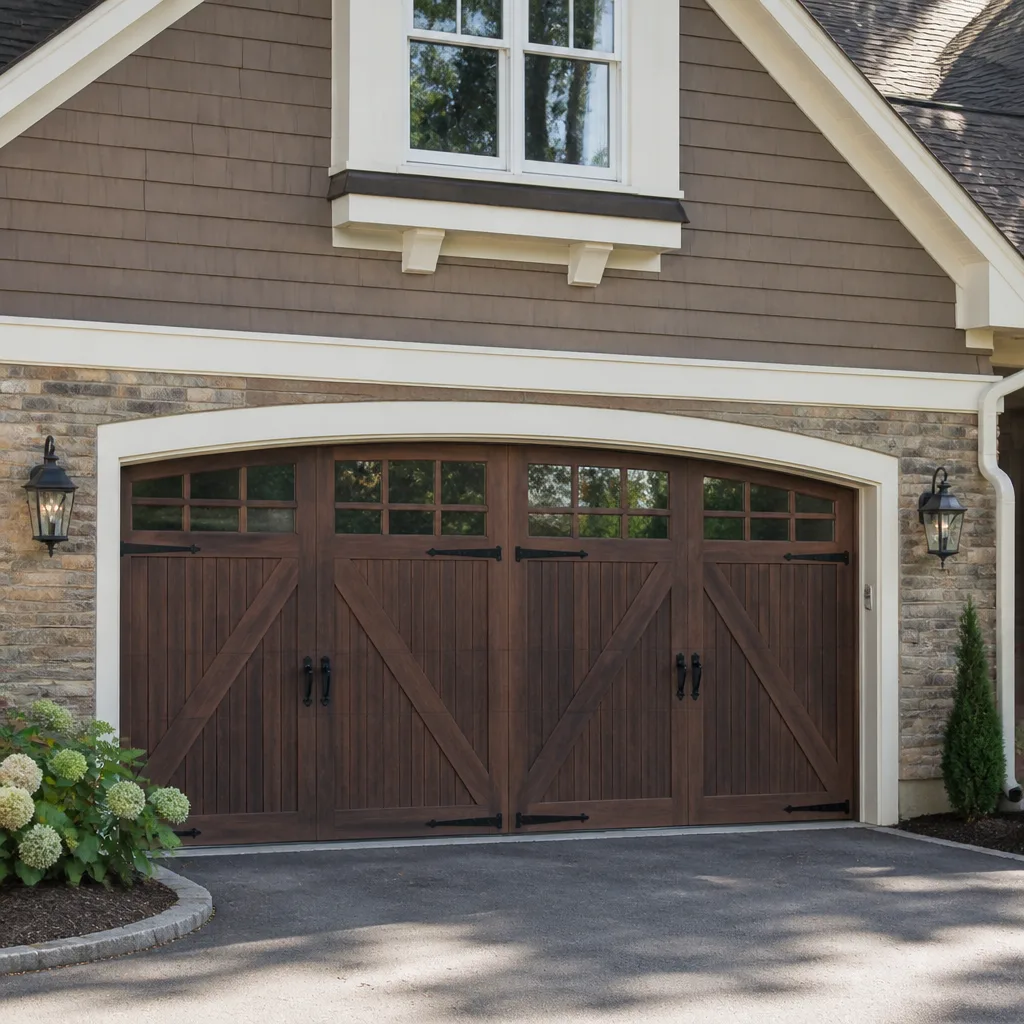 Carriage house
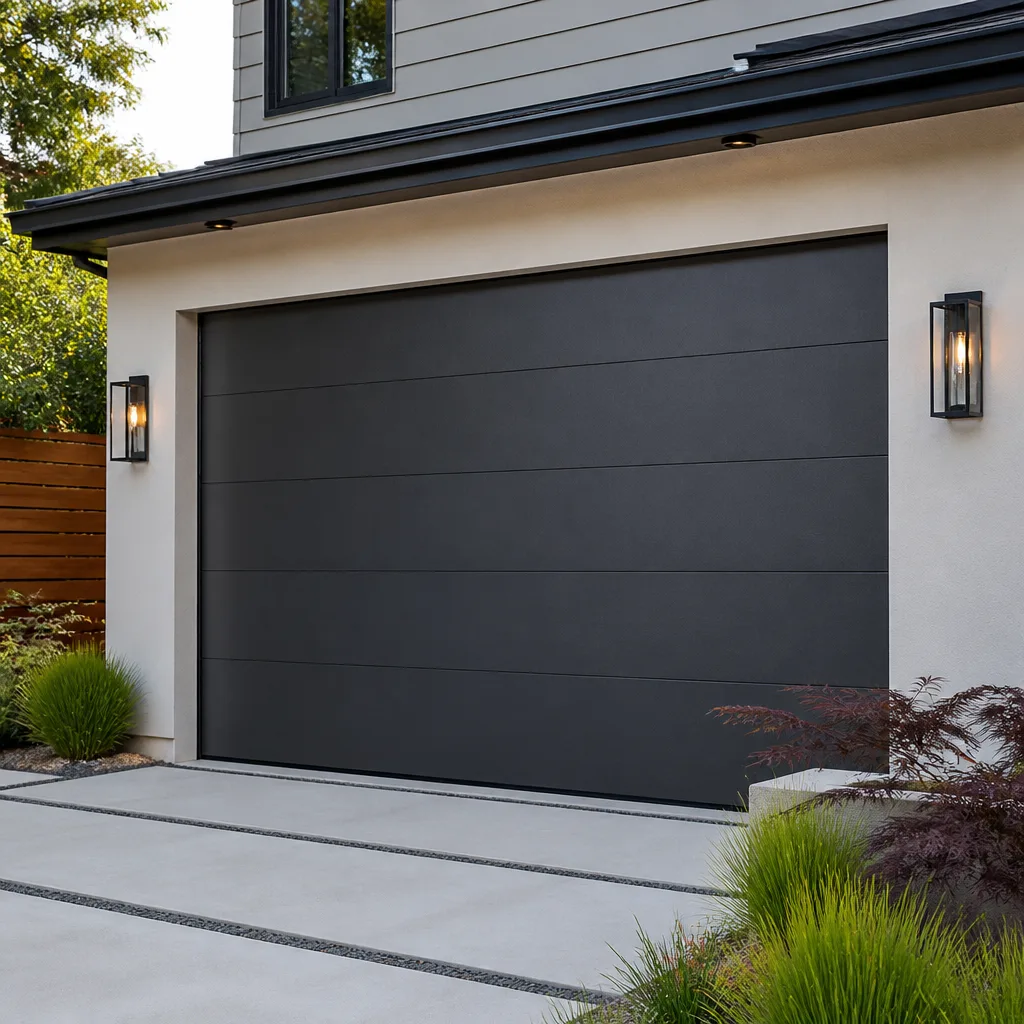 Modern flush
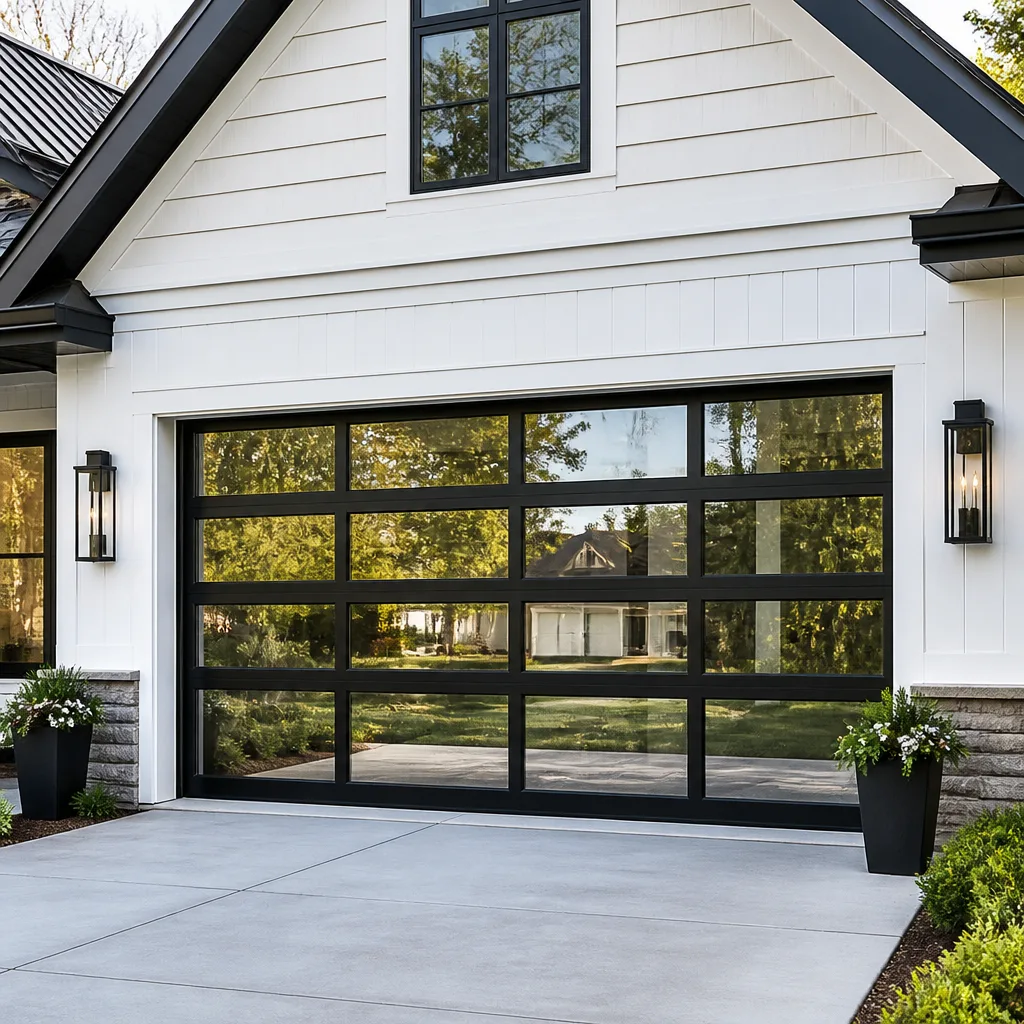 Full-view glass
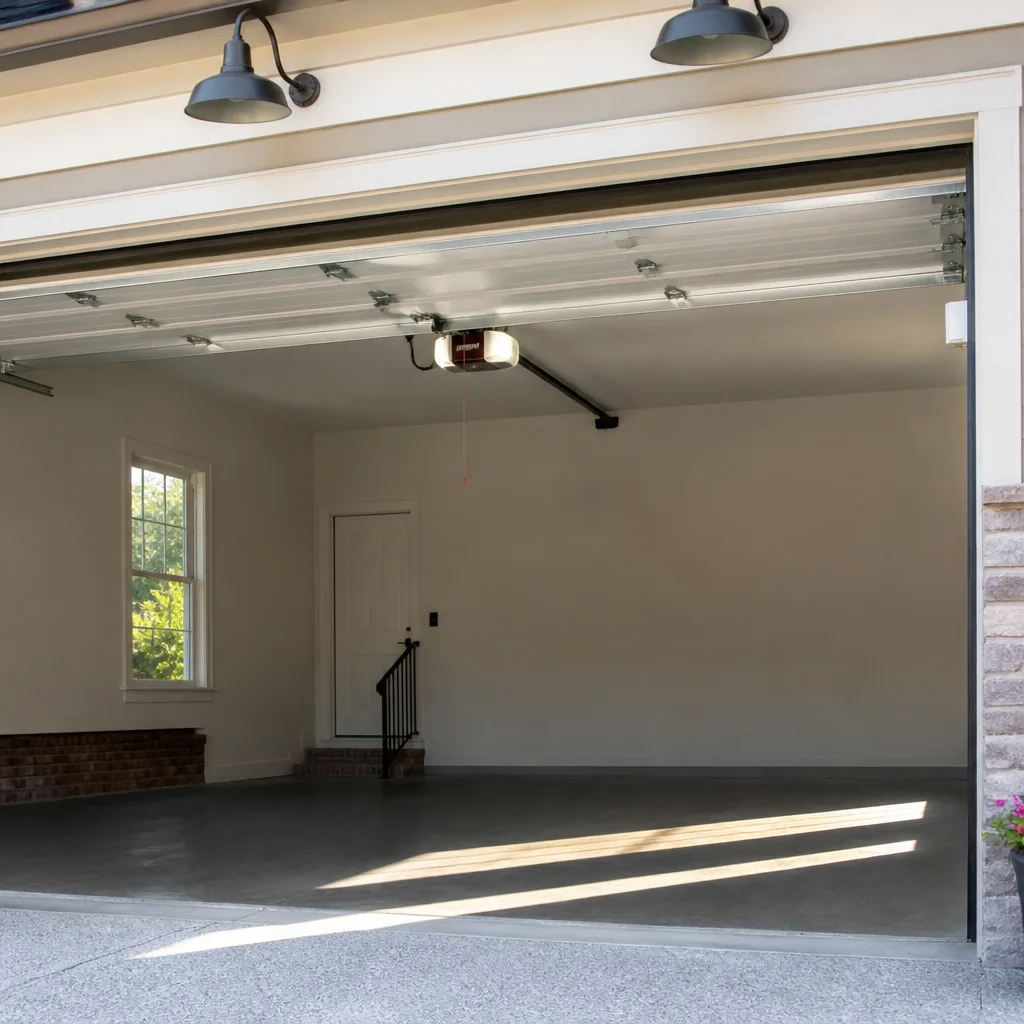 LiftMaster openers
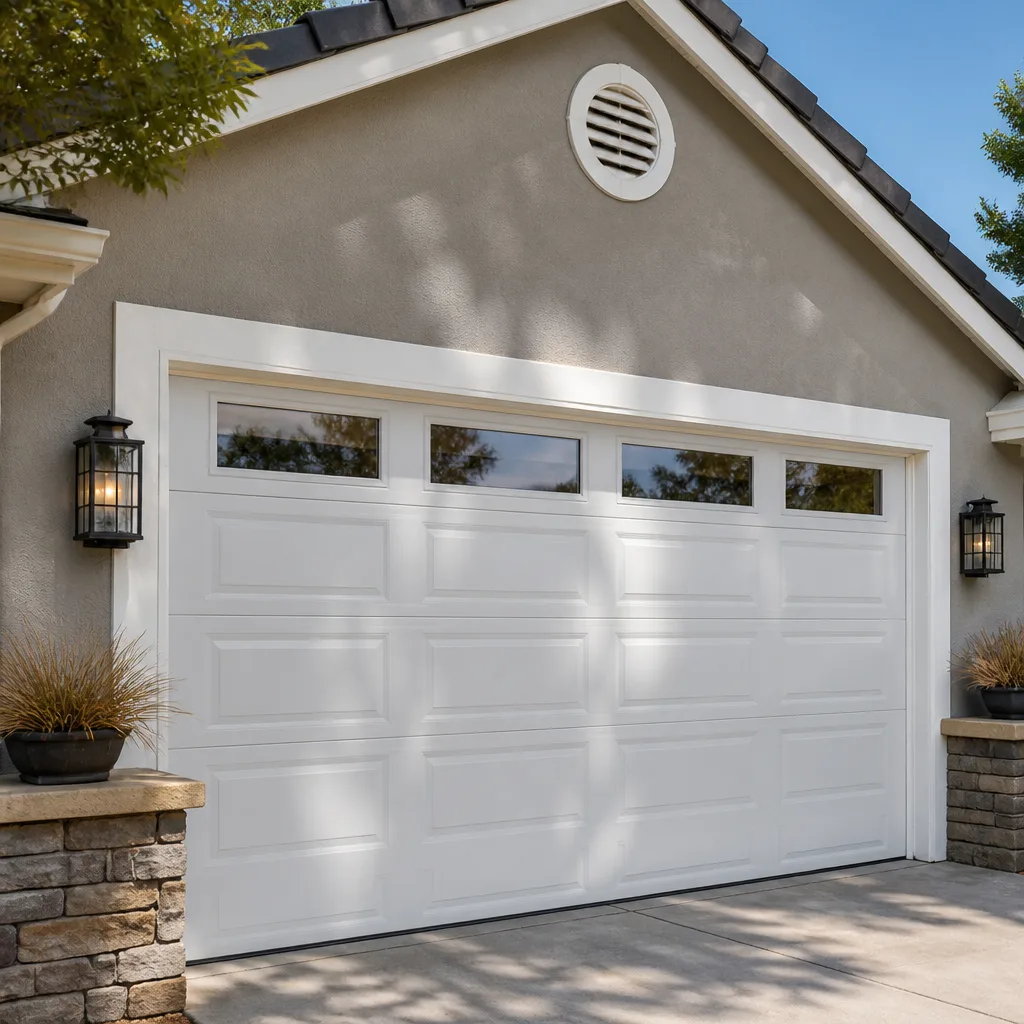 Chamberlain openers
Full 25-point door and opener safety check with every visit - springs, cables, rollers, tracks, and your LiftMaster or Chamberlain opener included
You get a price before we start. It does not change when the pro arrives.
Get your free estimateGarage Door Emergency Preparedness Guide for Mayfair Homes
Most garage door advice assumes the door is misbehaving in a convenient way. It isn’t. When a torsion spring snaps at 11pm with your car inside, the red manual release cord hanging from the opener rail is worse than useless. A door with a broken spring has lost its counterbalance, and it now weighs well over 150 pounds. Pulling that cord and trying to lift the door by hand puts the full weight of the panels above your head, your car, or both. What follows is built around the two failures that actually strand Mayfair homeowners: a door stuck open and a door stuck closed. The protocols are opposite, and mixing them up is how small problems become dangerous ones. We’ll walk through both, plus winter-specific failures, power outages, and a decision tree for when a call can wait until morning.
Quick Answer
A garage door emergency in Mayfair splits into two categories with opposite responses. A door stuck open is a security emergency: lock the garage however you can and arrange a same-day repair. A door stuck closed is an access emergency: manual release may free your car, but only if both springs are intact; if a spring is broken, do not lift the door and call for same-day service. In both cases, keep people and vehicles clear of the door path until a technician confirms the system is safe.
Styles & brands we work with
- Raised-panel steel
- Carriage house
- Modern flush
- Full-view glass
- LiftMaster openers
- Chamberlain openers
Table of Contents
- The Two Kinds of Garage Door Emergency
- How to Use the Red Emergency Release Cord Safely
- Winter Failures Specific to Mayfair
- Power Outage Protocol for LiftMaster and Chamberlain Openers
- The Emergency Contact Decision Tree
- Building a Garage Door Emergency Kit
- Common Mistakes to Avoid
- When to Call a Professional
The Two Kinds of Garage Door Emergency
The first thing to establish when a door fails is which emergency you’re actually in. The response is not the same, and treating one like the other wastes the most valuable minutes.
Door Stuck Open: The Security Emergency
A door that won’t close leaves your garage, and everything in it, exposed. That’s the priority, not the door itself. If the door is fully open and stable, don’t force it down. A door that comes down out of control can bend panels, break hinges, or crush whatever is beneath it. Instead:
- Move valuables out of the garage and into the house if you can do so safely.
- Close the interior door between garage and house and lock it.
- If you have a vehicle inside you need, move it out first. The door can be dealt with after.
- For a door held open by a broken cable or off-track roller, don’t attempt to close it manually. Wedge or block the opening if you must, and call.
- For a door stuck open purely because the opener won’t run, you may be able to lower it by hand once you’ve confirmed the springs are intact. See the release cord section below.
If the door is open and the garage can’t be secured at all, that’s a same-day call. We treat unsecurable openings as urgent because the exposure is ongoing, not a one-time event.
Door Stuck Closed: The Access Emergency
A door that won’t open is an inconvenience until you need the car, the tools, or the medication stored in the garage. Then it’s a real problem. The critical question is whether a spring has failed. If both springs are intact and the door is simply not responding to the opener, the manual release can usually free you. If a spring is broken, the door is no longer counterbalanced and manual lifting is dangerous. Your car stays put, and you call.
In our experience across Mayfair, the stuck-closed call almost always traces back to one of three things: a snapped torsion spring, a stripped opener gear, or a photo-eye that’s been knocked out of alignment. The first is the dangerous one. The other two are annoying but manageable.
How to Use the Red Emergency Release Cord Safely
The red cord disconnects the door from the opener’s trolley so the door can be moved by hand. It does not disconnect the springs. That distinction is the whole ballgame.
Before You Pull
- Check both springs. Look at the torsion spring on the shaft above the door, or the extension springs running along the tracks. A broken spring shows a visible gap in the coil. If you see one, stop. Do not pull the cord and do not lift the door.
- Check the door’s weight. With the door closed and the opener disengaged, a properly balanced door can be lifted with one hand and will stay put halfway up. If it feels heavy, the springs are failing.
- Make sure no one is in the door’s path. The door travels on tracks that can fail if a cable snaps. Keep children and pets clear.
- Reach the cord safely. Use a step stool if you need one, but never stand on the top step or on a ladder you haven’t set level. The cord hangs from the trolley, and reaching it from an awkward position is how people fall.
Pulling and Lifting
Pull the cord straight down and toward you until it clicks free. The door is now disconnected from the opener. Grip the door’s bottom section firmly with both hands, close to the center, and lift straight up. Keep your body to one side of the door, not directly underneath it. If the door resists or feels like it’s binding, lower it and stop.
Never leave a door disconnected from the opener in the open position without blocking it. A disconnected door has nothing holding it up except its own balance, and if the spring is marginal, that balance can let go.
Winter Failures Specific to Mayfair
Mayfair winters bring the two garage door complaints we hear most: doors that won’t open and openers that groan and give up. Both are cold-weather problems, not door problems, and both have fixes that don’t involve forcing anything.
The Bottom Seal Frozen to the Concrete
When the rubber bottom seal freezes to the slab, the opener pulls against a door that’s stuck to the floor. The opener’s safety system may stop it, or the door may jerk and strain before releasing. Forcing it is exactly the wrong move: a frozen seal tears when pulled, and a hard enough yank can warp the bottom section or strip the opener’s gear.
The fix is patience and warmth. Never pour hot water on the seal; the thermal shock cracks the rubber. A gentle application of warm air from a hair dryer along the seal line, or a few minutes with the garage heater running, will usually free it. Once it’s open, wipe the seal dry and treat it with a silicone-based lubricant so it doesn’t bond again. If the seal has already torn, it needs replacing before the next freeze.
Openers Struggling in the Cold
Below about 20°F, the grease in an opener’s gear case thickens and the motor works harder. A door that’s marginally balanced in October will strain in January. If your opener is laboring, the door’s balance is the likely culprit, not the motor. A properly balanced door should lift with one hand. If it doesn’t, the springs need attention, and no amount of opener adjustment will fix that. A technician can rebalance the door and check the opener’s force settings so it’s not working against itself all winter.
This is a good moment to note that we work on Clopay and Wayne Dalton doors as readily as LiftMaster and Chamberlain openers, so a winter tune-up covers the whole system rather than one half of it.
Power Outage Protocol for LiftMaster and Chamberlain Openers
Most LiftMaster and Chamberlain openers are sold with a battery backup, but plenty of Mayfair homes don’t have one, and a dead battery after a long outage behaves the same as no battery at all. Here’s how to disengage and re-engage yours without damaging it.
Disengaging
- Pull the red release cord down and toward the door until the trolley clicks free.
- Lift the door by hand to the open position. A balanced door should stay up.
- Move your car out if you need to, then close the door by hand and secure it.
Re-engaging: The Step People Get Wrong
Re-engaging is where openers get damaged. The trolley must be back in line with the opener’s carriage before the opener runs. If it’s not, the opener engages against a misaligned trolley and strips its drive gear on the first press of the button.
- Close the door fully by hand.
- Pull the release cord again, or flip the lever, to re-engage the trolley. You should feel it click back onto the carriage.
- Before pressing the wall button, run the opener a few inches by hand to confirm the trolley is riding correctly on the rail.
- Press the wall button once and watch. If the door moves smoothly, you’re set. If it grinds or jerks, stop and call.
If the opener was already struggling before the outage, the outage didn’t cause the problem. Our garage door opener repair service covers logic boards, trolley carriages, and drive gears, and it’s worth having the opener checked rather than waiting for it to fail outright.
The Emergency Contact Decision Tree
Not every failure needs a call after hours, and not every after-hours call is worth making. Use this decision tree to sort urgency from inconvenience.
Call Same-Day
- A broken spring with your car trapped inside. The door can’t be lifted safely, and the vehicle is stuck. This is the classic same-day call.
- A door stuck open and unsecurable. If you can’t close the garage at all, the exposure is ongoing.
- A door that’s come off its tracks. Off-track doors can fall, and forcing them back makes it worse.
- A snapped cable. A loose cable can whip, and the door loses its lifting support on one side.
- Any door with a visible gap in the spring coil. That’s a spring failure, and springs are not a DIY component.
Wait Until Morning
- The door opens and closes but slowly. A slow-rising door suggests the opener is working harder than it should, but it’s not unsafe tonight.
- One remote stopped working. Change the battery or reprogram it from the opener’s manual. If it still fails, it can wait.
- A noisy door. Squeaks and rattles usually mean dried hinges and rollers. Lubrication is a daytime job.
- The opener light won’t turn off. Annoying, not urgent.
- A misaligned photo-eye. As long as the door still closes and opens, the eyes can be adjusted in daylight.
If you’re not sure which column you’re in, call and describe what you’re seeing. We’ll tell you honestly whether it can wait. Our technicians have up to 12 years of experience, and we’d rather talk you out of an unnecessary emergency call than have you pay for one.
Building a Garage Door Emergency Kit
The best time to prepare for a garage door failure is before it happens. A small kit in the garage covers most of the scenarios above.
- A rechargeable work light that runs on battery, since the failure may coincide with a power cut.
- Work gloves for handling the release cord and door edges.
- A silicone-based lubricant for hinges, rollers, and the bottom seal.
- A hair dryer you don’t mind keeping in the garage, for freeing a frozen seal.
- Written instructions for your opener’s manual release, taped to the wall beside it.
- Our number, (833) 468-5701, on a sticker inside the garage door’s frame where you can find it in the dark.
Also worth doing once a season: check the door’s balance by disconnecting the opener and lifting the door to halfway. If it doesn’t stay put, the springs need attention before they fail. And test the photo-eye by waving an object in front of it with the door closing. The door should reverse. If it doesn’t, that’s a safety issue that shouldn’t wait.
What to Do if the Door Comes Off Its Tracks
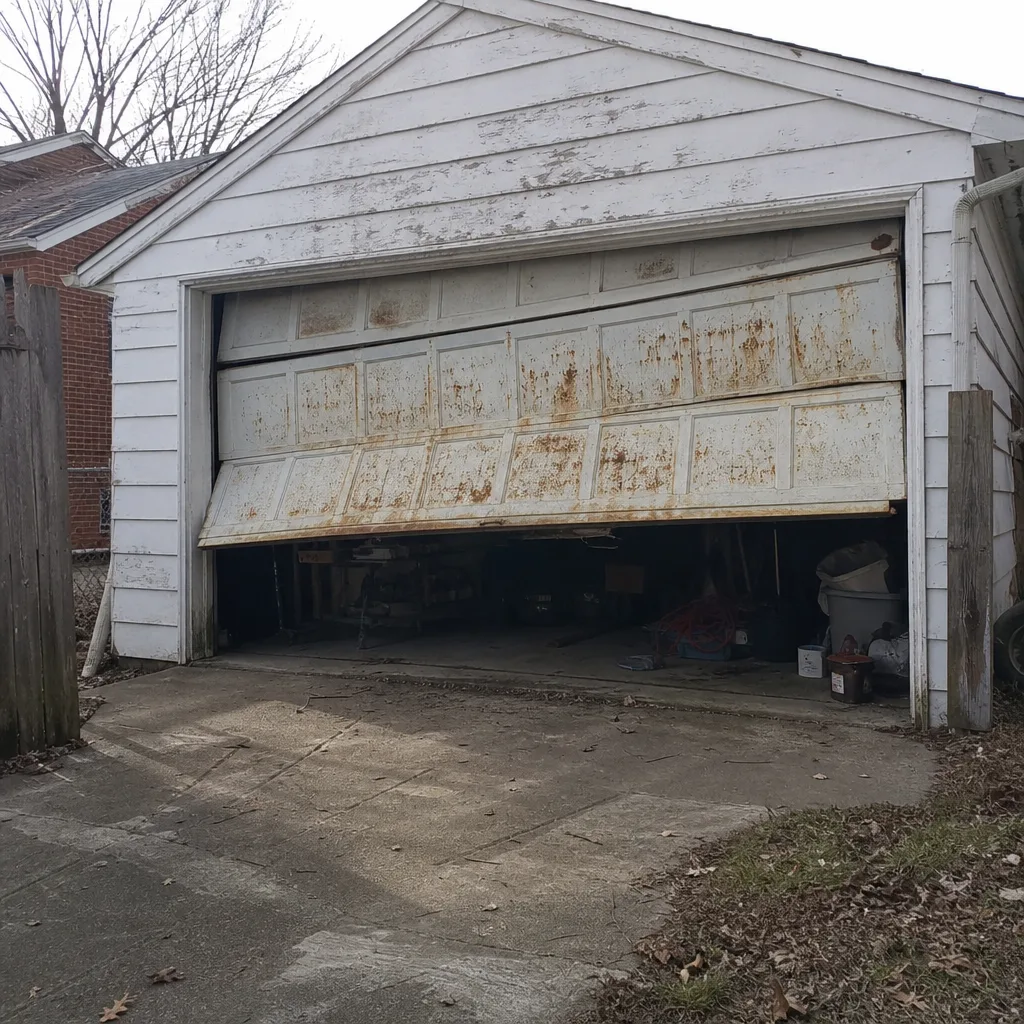
An off-track door is the one failure where doing nothing is the correct first move. When a door jumps its track, the panels are no longer supported on both sides, and the whole door can fold or fall. Don’t push, pull, or try to work it back into the track. Don’t run the opener. Clear the area and call.
Off-track doors usually happen for one of a few reasons: a roller has worn through or snapped, a track has bent or loosened from the wall, or a cable has failed on one side. If the track is only slightly bent and no panel has folded, a technician can often straighten and re-secure it without replacing the door. If a panel has buckled, that section needs replacing, and the door may be a candidate for replacement rather than repair. Our garage door repair service covers both the assessment and the fix.
While the door is off-track, secure the opening however you can. If the garage has an interior door to the house, lock it. If not, park a vehicle close to the opening, or use a brace across the door on the inside. Then call for same-day service.
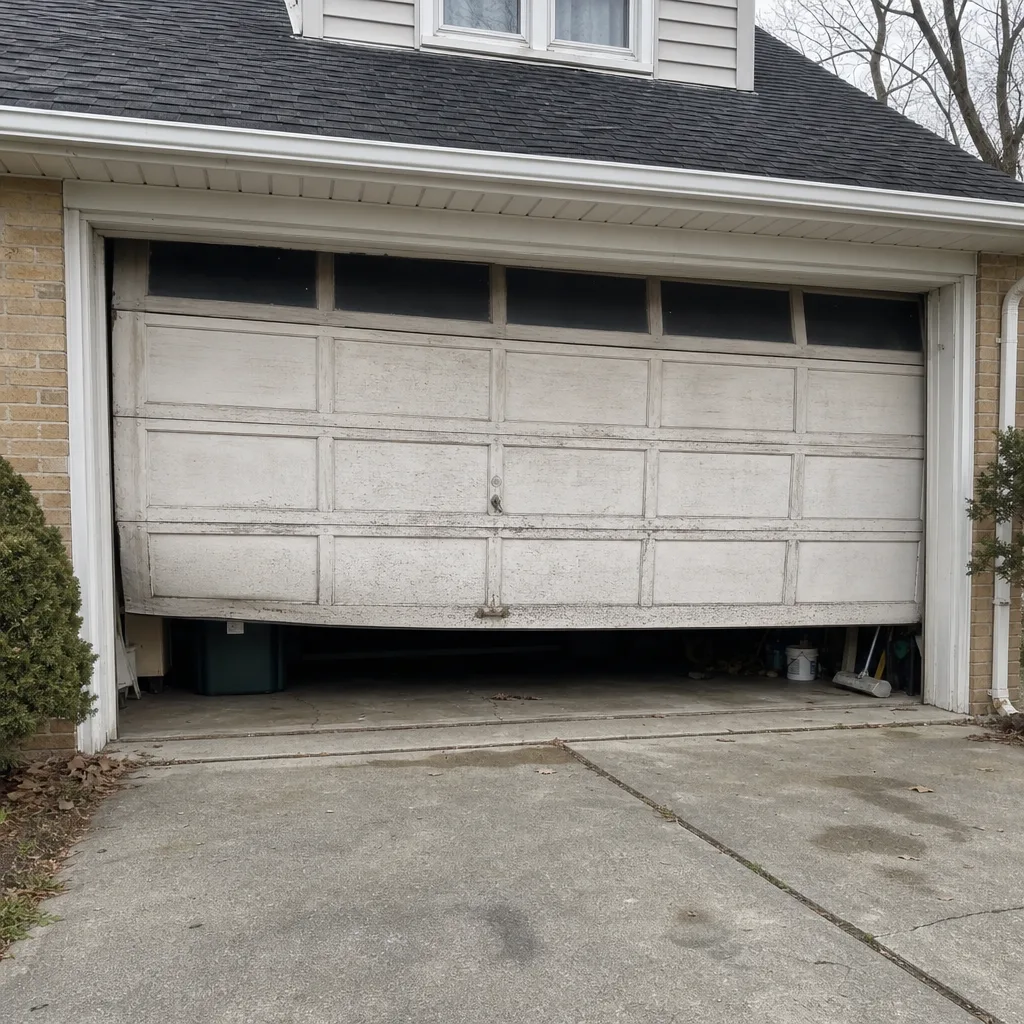
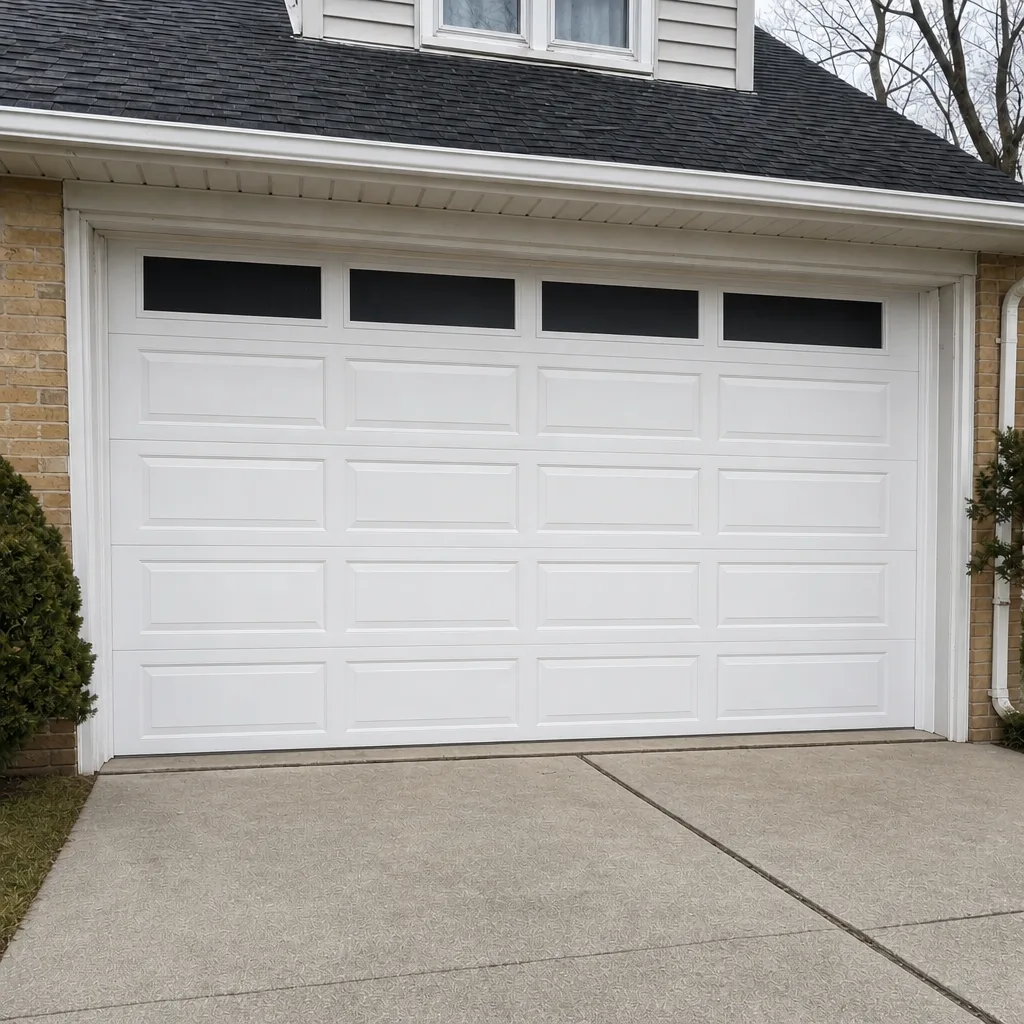
See the difference
 Before
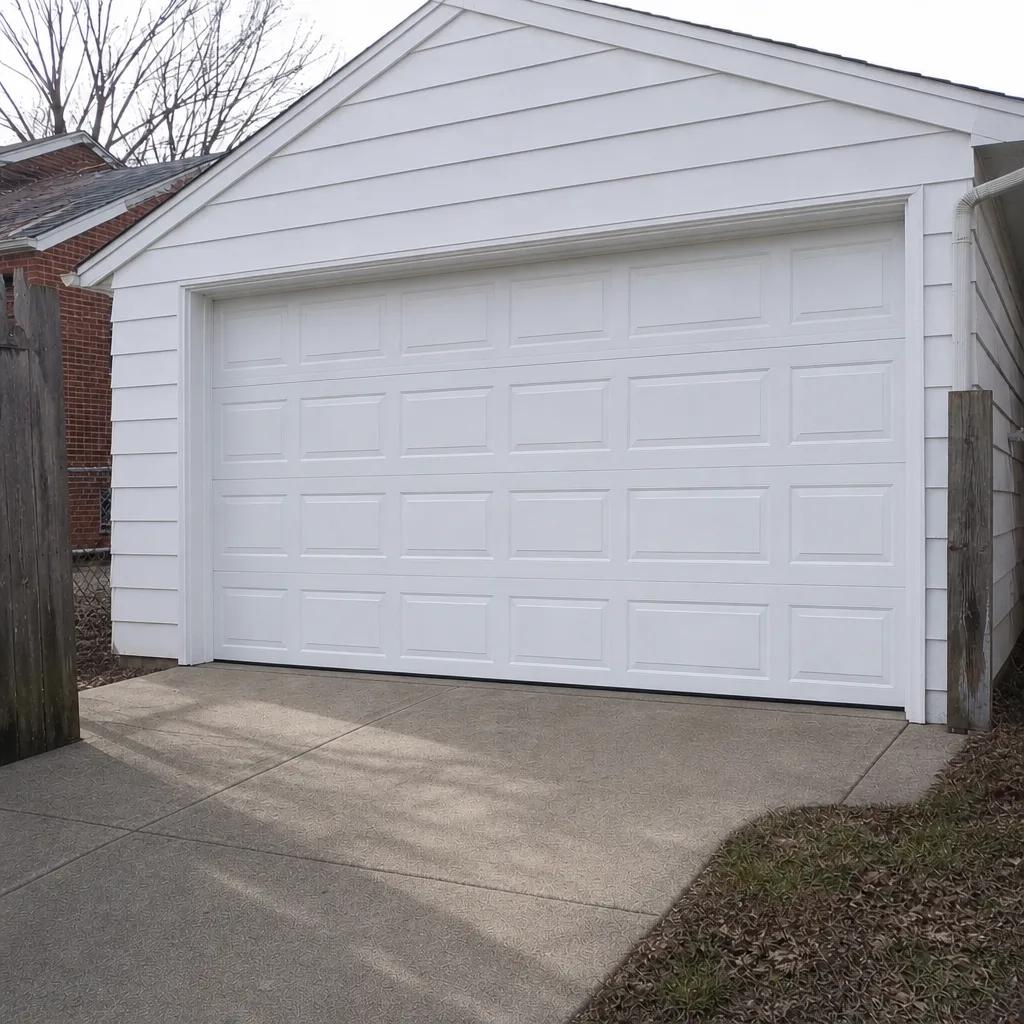 After
 Before
 After
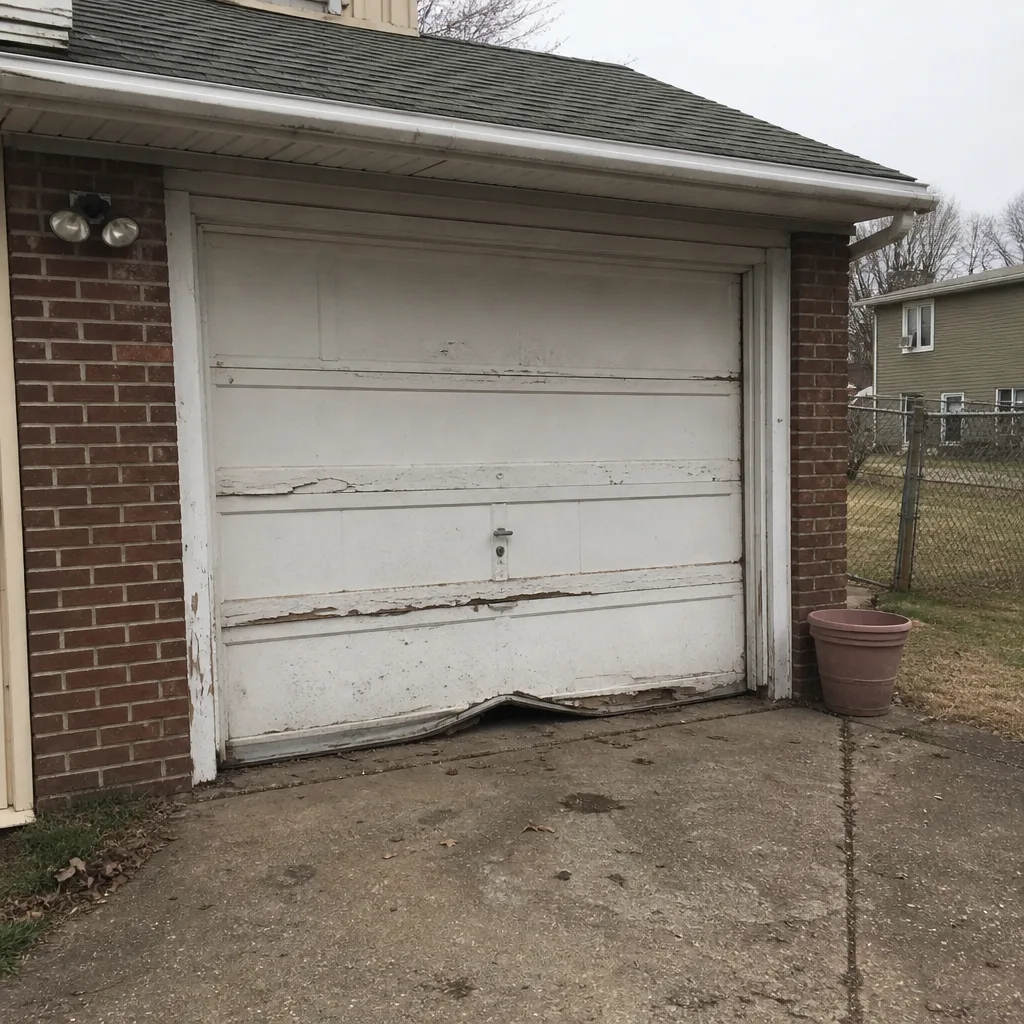 Before
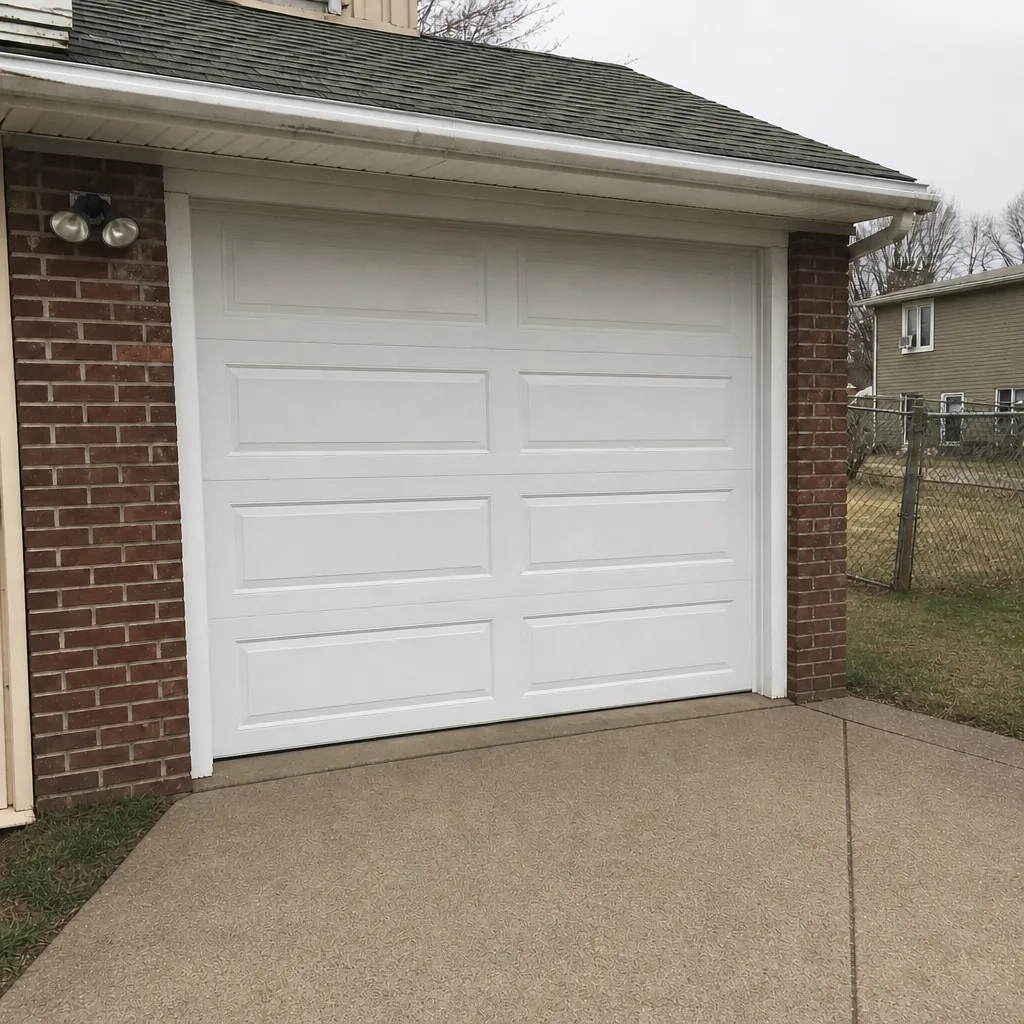 After
Spring Failures: Why They’re the One Thing You Don’t DIY
Torsion and extension springs hold the full weight of the door, and they’re under tension at all times. When a torsion spring breaks, it releases that stored energy instantly. The result is a loud bang, a door that suddenly weighs far more than it should, and a system that’s no longer in balance. Extension springs can fly off their track when they snap.
Replacing a spring is not a wrench-and-ladder job. It requires the correct spring for the door’s weight, the right tools to wind the spring to its proper tension, and the knowledge to do it without putting your hands in a hazardous position. A spring wound by the wrong amount can fail again immediately, and a door that lifts unevenly can damage the opener, the tracks, and its own panels.
Spring repair is a core part of what we do, and it’s a repair many general contractors won’t touch. If you hear a bang from the garage and the door suddenly won’t lift, that’s the call to make. Don’t try to lift the door to check. Just call, and keep the area clear until a technician arrives.
Common Mistakes to Avoid
- Pulling the red cord without checking the springs first. A broken spring means the door is far heavier than you expect. Pulling the cord and lifting can drop the door on your vehicle or you.
- Forcing a frozen bottom seal. The opener will eventually win the tug-of-war, but the seal tears and the bottom section can warp. Free it with gentle warmth instead.
- Re-engaging the opener without watching the trolley. A misaligned trolley strips the drive gear the first time the opener runs. That turns a power outage into an opener repair bill.
- Pushing an off-track door back into place. The door has lost its support and can fold. Leave it and call.
- Pouring hot water on a frozen seal. The thermal shock cracks the rubber. Use warm air, not hot water.
- Greasing the springs. Torsion springs should not be lubricated with heavy grease, which collects grit. A light silicone spray is the exception, and only on the coils.
- Ignoring a door that’s slow to rise. A slow door is a door working against its own springs. Left alone, it will eventually cost you an opener as well.
Repair or Replace After an Emergency?
Once the immediate emergency is handled, the next question is usually whether the door is worth repairing. The answer depends on the door’s age, the damage, and whether the failure points to a worn system rather than a single part. A snapped spring on an otherwise sound door is a repair. A door with several bent panels, a failing opener, and worn tracks may be a replacement candidate.
Because we do both repair and garage door installation, we can talk through the trade-offs without steering you toward one answer. Clopay and Amarr doors are both worth considering if replacement is on the table, and both are systems we work on. If you’d rather understand the full picture first, our overview of Garage Door Repair Mayfair covers the range of what we handle.
Keeping Your System from Failing in the First Place
Most emergency calls we see trace back to a maintenance gap that ran for months. The fix is a short seasonal routine, done twice a year, that takes about fifteen minutes.
- Disconnect the opener and test the door’s balance by lifting it to halfway. It should stay put.
- Lubricate hinges, rollers, and the torsion spring coils with a silicone spray.
- Wipe the bottom seal clean and treat it with silicone so it doesn’t bond to the concrete.
- Check that all rollers are seated in their tracks and none are worn through.
- Test the photo-eye by blocking it with the door closing. The door should reverse.
- Test the door’s force settings by pressing the wall button and watching for hesitation or strain.
If any step fails, note it and book a service call before it becomes an emergency. The cost of a tune-up is far less than the cost of a snapped spring or a stripped opener gear.
When to Call a Professional
Call a professional when the failure involves a spring, a cable, an off-track door, or any situation where the door is no longer balanced. These are the failures that carry real safety risk, and they’re the ones we’d never encourage a homeowner to attempt. Our technicians have up to 12 years of experience, and the work is the kind that rewards that experience. Call for a same-day visit when the car is trapped or the garage is unsecurable, and call the next morning for slow doors, noisy hardware, or a remote that’s stopped working. Garage Door Repair Mayfair offers free estimates in Mayfair. Call (833) 468-5701. The price is quoted and agreed before any work starts, so there are no surprises on the invoice.
Frequently Asked Questions
Look at both springs before you touch anything. If you see a visible gap in the torsion spring above the door or an extension spring that’s snapped, do not lift the door by hand, and call for same-day service. If the springs look intact and the opener just isn’t running, pull the red release cord and lift the door by hand. Call (833) 468-5701 if you’re not sure which situation you’re in. Estimates are free.
No. A door with a broken spring has lost its counterbalance and can weigh well over 150 pounds. Lifting it by hand puts the full weight of the panels above you and your vehicle, and the door can drop without warning. Keep everyone clear and call a technician.
Close the door fully by hand, then pull the release cord or flip the lever to click the trolley back onto the carriage. Before pressing the wall button, run the opener a few inches by hand to confirm the trolley is riding correctly. If you press the button with a misaligned trolley, the opener strips its drive gear. If you’re unsure, call (833) 468-5701 for guidance.
The rubber bottom seal has bonded to the concrete slab. Free it with gentle warm air from a hair dryer or a garage heater, never with hot water. Once it’s free, wipe the seal dry and apply a silicone lubricant so it doesn’t bond again. If the seal has already torn, it needs replacing.
A broken spring with a car trapped inside, an unsecurable open door, a snapped cable, or an off-track door are same-day emergencies. A slow-rising door, a noisy door, a dead remote, or a misaligned photo-eye can wait for a morning call. Call (833) 468-5701 and describe what you see, and we’ll tell you honestly whether it can wait.
No. The written quote sets the price. We quote and agree the price before any work starts, so the number on the invoice matches the number you approved. Call (833) 468-5701 for a free estimate.
The Bottom Line
The core of a garage door emergency is knowing which one you’re in. A door stuck open is a security problem: secure the garage and call. A door stuck closed is an access problem: manual release can help, but only if both springs are intact. Check the springs before you pull the red cord, free a frozen seal with warmth rather than force, re-engage the opener only after confirming the trolley is aligned, and never lift a door with a broken spring. Everything else on this list is a maintenance item. Those five points are the ones that matter at 11pm. Written by the team at Garage Door Repair Mayfair.
Call (833) 468-5701 for a free estimate. Our technicians have up to 12 years of experience, we work on Clopay, Amarr, Wayne Dalton, and Craftsman systems, and the price is quoted and agreed before any work starts.
Written by the team at Garage Door Repair Mayfair.